In this guide
- NCJUA and NCIUA are different associations
- Check the address, product and condition requirements
- A crucial rule for a separate NCIUA wind policy
- Compare what each proposed product actually covers
- Flood remains a separate coverage question
- How private alternatives may fit
- Review total cost and lender requirements together
- A useful request for your agent
- Frequently asked questions
- Sources and further reading
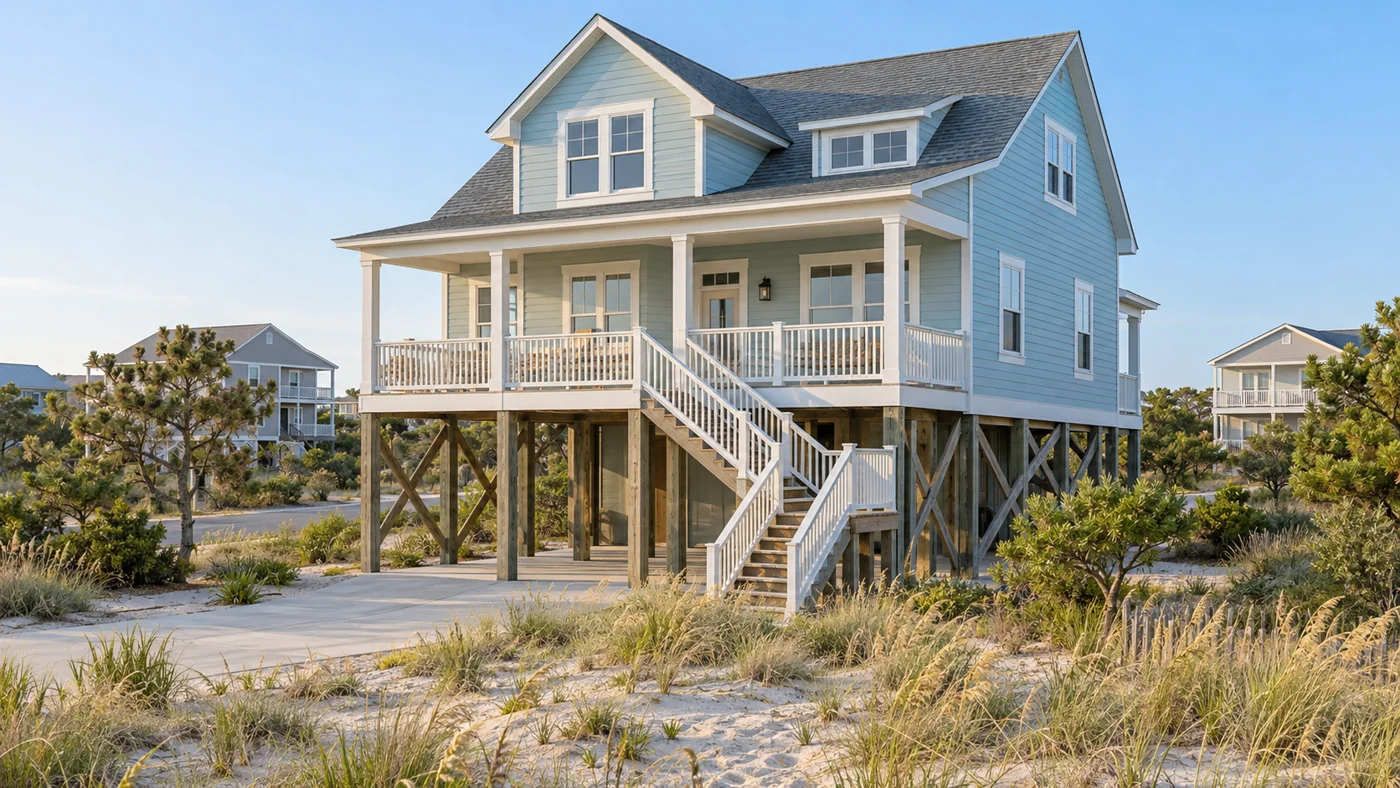
North Carolina's FAIR Plan and Coastal Property Insurance Pool are different residual market arrangements. NCJUA dwelling-fire coverage excludes the defined Beach Area; NCIUA products serve eligible Beach and Coastal properties under product-specific rules. Compare the actual plan product with private options and coordinate any separate wind or flood coverage carefully.
Finding fewer insurance choices can feel like a dead end, especially after a nonrenewal or a difficult coastal quote. North Carolina has established residual market mechanisms, and private options may also be available. The next step is to understand which coverage each route actually provides.
Do not let the phrase “state plan” stand in for a policy review. These associations have distinct roles, eligibility requirements, forms, and underwriting conditions. A wind-only policy, a basic property policy, and a homeowners package are not interchangeable products.
NCJUA and NCIUA are different associations
The North Carolina Joint Underwriting Association, or NCJUA, is commonly called the FAIR Plan. Its stated mission is to act as a market of last resort for adequate basic property insurance for owners with eligible insurable property. Its dwelling-fire product excludes the defined Beach Area.
The North Carolina Insurance Underwriting Association, or NCIUA, is commonly called the Coastal Property Insurance Pool. Its mission concerns adequate essential property insurance for eligible property in North Carolina's Beach and Coastal Areas. An inland address should not be assumed eligible merely because the owner wants wind coverage.
The associations are tax-exempt associations of insurance companies created by law. Describing them simply as a government insurance company can obscure their actual structure. This website is not either association and cannot determine an application's acceptance on their behalf.
Start with the official association materials and an agent familiar with the requested product. Ask for the exact association name, product, form, territory, limits, and underwriting requirements. A nickname such as beach plan is not enough to identify what you are buying.
Check the address, product and condition requirements
Eligibility involves more than whether a home is difficult to insure. The actual address, territorial rules, construction, condition, use, value, requested coverage, and other underwriting requirements can affect the available plan option. Current manuals and forms control those details.
A primary residence, seasonal home, rental dwelling, condominium unit, and building undergoing substantial work may need different treatment. Tell the agent how the property is used now and how that use may change. A homeowner should not force an application into an inaccurate occupancy category to fit a product.
Ask what inspections or repairs may be required. Document completed work with dated photographs, invoices, permits, and appropriate reports. If something remains unfinished, explain the schedule and ask whether it affects eligibility or the effective date.
Do not assume a particular limit, deductible, or form remains available because it appeared in an old article. Plan requirements can change. The agent should verify the current requirements for your address and explain any coverage that must be obtained elsewhere.
The associations' Services and Coverages page draws a useful distinction. NCJUA offers dwelling-fire and commercial-fire products outside the defined Beach Area. NCIUA offers homeowner and wind products in its eligible coastal territory, while its dwelling-fire and commercial-fire products have a narrower Beach Area scope.
The defined Beach Area is not simply every address in a coastal county. The association describes it in relation to the inland waterway and includes the Outer Banks. Have the agent verify the territory assigned to the exact property instead of deciding from a mailing address or a county name alone.
A dwelling-fire form should prompt a careful comparison with a homeowners package. Ask separately about liability, personal property, loss of use, and any other protection you need. The term fire in a product name does not by itself describe every covered peril, but neither does the presence of wind coverage make the product equivalent to a comprehensive homeowners contract.
The plan's available limits and valuation rules also matter for larger or higher-cost homes. If a proposed limit falls short of the rebuilding requirement, ask whether additional coverage is required and available before relying on the primary offer. Do not assume a plan acceptance resolves the full-value insurance question.
A crucial rule for a separate NCIUA wind policy
The North Carolina Department of Insurance's windstorm and hail guidance states that eligibility for an NCIUA windstorm and hail policy requires an active primary coverage policy from an admitted carrier in North Carolina that has excluded windstorm.
This is an important limit on how alternatives are presented. Do not assume you can combine any surplus homeowners policy with an NCIUA wind-only policy. The status and wording of the companion primary policy must meet the applicable eligibility requirements.
Ask the agent to confirm the primary insurer, the wind exclusion, the separate wind policy, and the effective dates as one coordinated arrangement. A policy labeled homeowners may still exclude wind; a policy labeled wind does not supply every other homeowners protection.
Also identify who handles claims reporting and adjustment when a loss may involve separate policies. Keep both declarations pages and both sets of endorsements. Coordinating the paperwork before a storm is much easier than discovering mismatched coverage after damage occurs.
Compare what each proposed product actually covers
| Proposed route | What to establish | Common comparison issue |
|---|---|---|
| NCJUA FAIR Plan product | Eligible property, selected form, covered perils and available limits | Basic property coverage may require other protection |
| NCIUA product | Territory, product type and underwriting requirements | Wind-only and broader products should not be confused |
| Private admitted policy | Property eligibility, forms and exclusions | Wind may be included or excluded |
| Private surplus policy | Placement eligibility, insurer and actual forms | Different protections, taxes, fees and policy terms |
For every proposal, check dwelling settlement, personal property, other structures, additional living expense, liability, and ordinance or law. Confirm whether those coverages exist, their limits, and the conditions for payment. A single premium number does not reveal the gaps.
Use identical reconstruction assumptions when possible. If one route offers a lower dwelling limit, record the resulting exposure rather than treating the lower price as an equivalent quote. Review the largest potential deductible in dollars as well as its percentage.
Still looking for a workable option?
An older roof, a nonrenewal, or a difficult property does not tell the whole story. Share the details so your available options can be evaluated.
Standard-market options are reviewed first. A request is an inquiry, not an offer or confirmation of insurance. Coverage is subject to underwriting.Flood remains a separate coverage question
The associations' official website states that NCJUA and NCIUA do not provide flood insurance. A homeowner should not treat either plan as a solution for rising water or storm surge merely because a storm is involved.
Wind damage and flood damage are different insurance questions. After a hurricane or heavy rainfall event, the cause of damage matters. A home can face both exposures, and the existence of a wind policy does not establish flood coverage.
Discuss separate flood options with the agent, including the building and contents limits, deductibles, effective date, any waiting period, and the treatment of items or spaces below elevated floors. Also ask about losses that the proposed flood contract does not cover.
Flood risk is not confined to beachfront property or mapped high-risk areas. Inland drainage, overflowing waterways, and intense rainfall can matter. A lender's requirement is a minimum loan condition, not a comprehensive personal risk assessment. Consider the property's circumstances even when the lender does not require flood insurance.
How private alternatives may fit
A private admitted offer may be available if the property meets a carrier's rules. A surplus lines placement may also be worth evaluating when the full amount or kind of coverage cannot be obtained from admitted insurers through the applicable search. The available route depends on facts and underwriting.
A surplus policy is not automatically broader, cheaper, or more suitable than an association product. Review insurer identity, required disclosures, financial strength, guaranty fund limitations, deductibles, exclusions, and total cost. Then compare the actual coverage with the plan option.
Be particularly careful with a promise to combine policies. The NCIUA wind-only companion requirement is specific, and other coverage combinations can create their own issues. The agent should explain how the proposed program works without assuming one policy will fill every omission in another.
Ask whether a private proposal includes wind or excludes it, whether any roof limitation applies, and whether separate flood coverage remains necessary. Our quote comparison guide helps organize these differences before you accept a proposal.
Review total cost and lender requirements together
If the program requires more than one policy, add the full cost of all required contracts. Include applicable taxes, fees, and financing charges. Keep each policy's deductible visible, because a single event can raise separate deductible questions depending on the damage and contract wording.
Mortgage lenders may require particular limits, perils, deductibles, insurer financial qualifications, and mortgagee language. Submit the entire proposed arrangement for review rather than sending only the least expensive declarations page.
Ask how the policies will be billed through escrow, if applicable. The lender may need separate evidence for homeowners, wind, and flood. Confirm which parties receive renewal invoices and whether a change in policy number or carrier requires new instructions.
Do not cancel existing insurance while the replacement is still an application or a conditional quote. Obtain written binding confirmation and coordinate the dates. If a closing or nonrenewal deadline is approaching, tell the agent and lender immediately so the outstanding tasks are visible.
A useful request for your agent
Provide the property address, current declarations, any nonrenewal notice, occupancy, reconstruction information, roof details, and recent loss history. Add the lender's insurance requirements and the date coverage must begin. This gives the agent a concrete starting point for both private and residual options.
Ask for a written outline showing which insurer or association would cover the building, wind, personal property, liability, and flood. Mark anything not included. Then ask for the important exclusions, deductibles, and binding conditions for each policy.
If improvements could change the available choices, identify them precisely. A roof replacement or corrected condition may help underwriting but does not guarantee a different market. Compare the cost and benefit of work based on the property's needs as well as insurance possibilities.
Review the arrangement at renewal. Keep inspection records, update the occupancy, and ask whether any suitable private offers have become available. Remaining with a plan or changing insurers should be a deliberate comparison, not an automatic reaction to a label.
Frequently asked questions
Is the North Carolina FAIR Plan the same as the beach plan?
No. NCJUA is commonly known as the FAIR Plan, while NCIUA is the Coastal Property Insurance Pool. Their missions, territories, products, and eligibility requirements differ. Ask the agent to identify the exact association and product before comparing coverage or assuming an address qualifies.
Can I pair surplus homeowners coverage with NCIUA wind-only coverage?
Do not assume so. NC DOI states that NCIUA windstorm and hail eligibility requires an active primary policy from an admitted North Carolina carrier that excludes windstorm. The agent must verify the companion policy's status and wording. A generic suggestion to add a beach-plan wind policy to any surplus contract is misleading.
Do NCJUA or NCIUA cover flood?
The associations' official website says they do not provide flood insurance. Review separate flood coverage if needed for the property or lender. Storm surge and rising water should not be treated as wind losses merely because a hurricane caused the event. The actual policy and cause of damage matter.
Are private alternatives always cheaper?
No. Total cost depends on the property, underwriting, coverage, limits, deductibles, taxes, fees, and any separate policies. A lower price may reflect narrower protection or a larger out-of-pocket exposure. Compare the complete program and important differences rather than treating one premium as the entire answer.
Will an association policy satisfy my lender?
The lender must review the actual coverage and insurer or association arrangement. It may require particular limits, deductibles, covered perils, mortgagee wording, and separate flood evidence. Send all relevant proposals early and resolve missing items before closing or canceling an existing policy.
Can I apply without knowing which plan I need?
You can start by giving an agent the address, use, condition, current policy, and reason you need another option. The agent should evaluate eligibility and explain the products that fit. An inquiry is not an acceptance, a quote is not binding, and coverage begins only when properly confirmed.
A clearer next step for your home.
Bring your coverage questions, property details, and deadline. Start a conversation about the options that may fit your situation.
Standard-market options are reviewed first. A request is an inquiry, not an offer or confirmation of insurance. Coverage is subject to underwriting.Sources and further reading
Official resources consulted for this guide. Program eligibility and policy wording can change; confirm the current requirements for your property.
- North Carolina Joint Underwriting Association and North Carolina Insurance Underwriting Association
- NCJUA/NCIUA: Association missions and flood statement
- NC DOI: Windstorm and Hail
- North Carolina General Statutes, Chapter 58, Article 21: Surplus Lines Insurance
Last source check: 2026-10-30. This guide is general information, not a coverage determination. Read our editorial standards.