In this guide
- Find the wind and hail provision first
- Distinguish three deductible questions
- Look closely at roof loss settlement
- Separate wind damage from water damage
- Coordinate any separate wind policy
- Document condition and mitigation honestly
- Keep a usable storm claim record
- Recheck storm terms at every renewal
- Frequently asked questions
- Sources and further reading
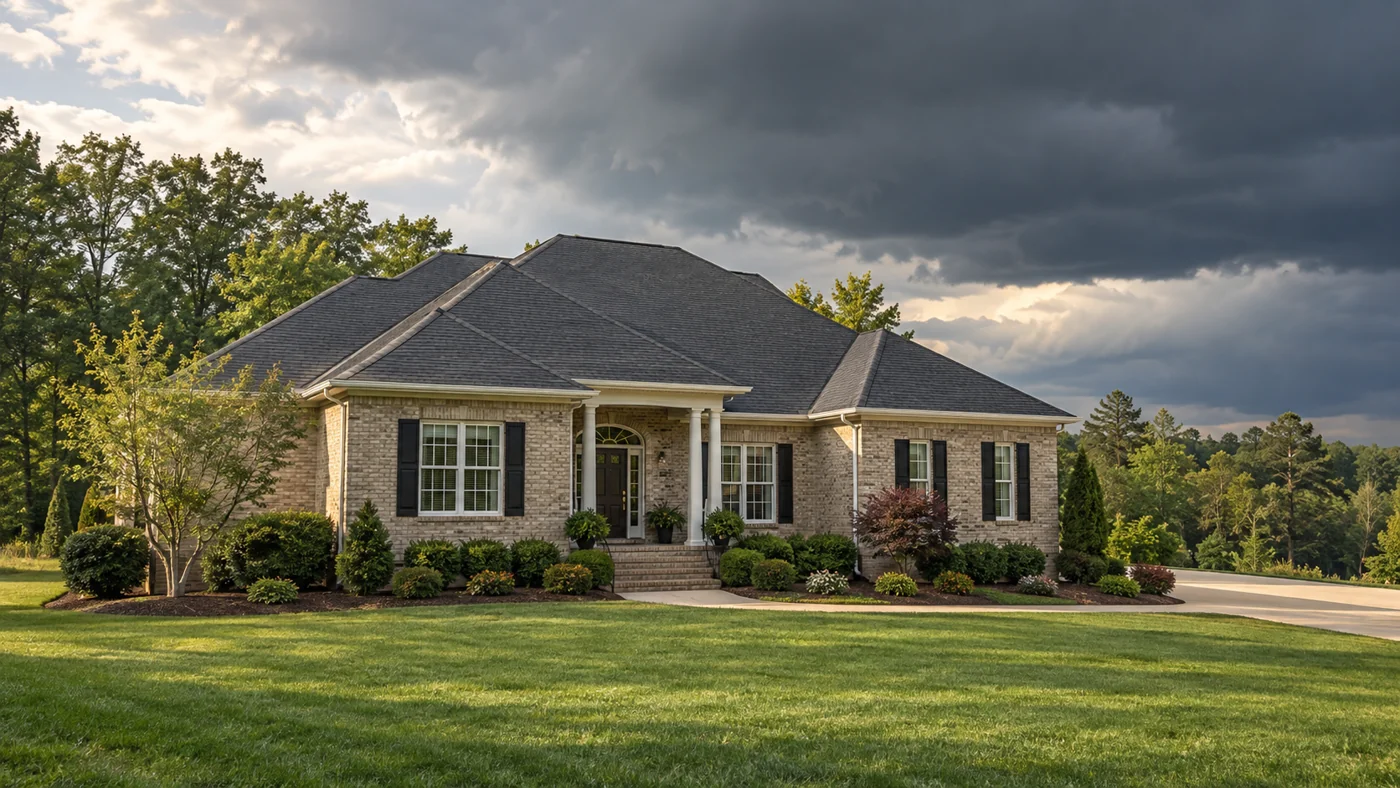
Wind, hail and tornado damage may be insured under a North Carolina homeowners policy, but coverage can be excluded or modified. Check the cause of loss, deductible, roof settlement and endorsements. A surplus policy requires the same careful review, and separate wind coverage must fit the eligibility rules of its provider.
A storm quote can be difficult to compare when one policy includes wind, another excludes it and a third offers a percentage deductible. Homeowners often discover those distinctions while facing a nonrenewal deadline. Breaking the decision into coverage, deductible and settlement questions makes the comparison more manageable.
This guide explains what to ask for a North Carolina home, including inland properties exposed to thunderstorms and tornadoes as well as coastal properties. It does not assume that every storm is a hurricane or that every policy uses the same North Carolina form.
Find the wind and hail provision first
Start with the declarations, the main policy form and every endorsement. Ask whether windstorm and hail are covered perils for the dwelling, belongings and other structures. An exclusion can remove protection that a general homeowners description appears to promise. A separate endorsement may then restore only part of the coverage or apply different conditions.
The NC DOI wind and hail guidance confirms that insurers can exclude those hazards from a primary residential policy depending on location and underwriting. Do not assume that an inland address guarantees inclusion. Conversely, a coastal address does not by itself identify the only available policy arrangement.
A tornado is a wind event, but whether its damage is covered still depends on the contract. If wind is excluded, a reference to tornado risk in sales material does not create coverage. Ask the insurer or agent to identify the provision that would respond, including any limitation affecting roofs, detached structures or wind-driven rain.
When a quotation is incomplete, request the forms before making the final decision. A summary marked comprehensive does not answer whether an endorsement excludes wind or settles roof damage differently. Keep the form numbers with your comparison notes so you can check the issued policy against the offer.
Distinguish three deductible questions
A policy may have an ordinary property deductible and a separate wind or hail deductible. It may also use a named storm or hurricane provision. Those labels are not interchangeable. Ask what event triggers each deductible, which coverage amount supplies the calculation base, and whether the provision applies per occurrence or under another stated method.
NC DOI describes typical named storm and wind or hail percentage deductibles. Its examples are useful education, but the wording of a particular surplus policy must be checked separately. A named storm definition can matter even when the strongest winds occur somewhere else. Ask for a practical explanation of the trigger without assuming the previous insurer’s definition carries over.
Hypothetical example: a one percent wind deductible calculated against a $400,000 dwelling limit equals $4,000. If covered repairs are $7,000, that deductible is a substantial part of the loss. This is arithmetic, not a quote or a claim adjustment. Other limits, settlement conditions and policy terms still affect payment.
Ask for each percentage deductible expressed in dollars using your proposed coverage amount. Review how those dollars change if the dwelling limit increases at renewal. Choose a deductible you can realistically fund, and keep emergency savings separate from the annual premium comparison.
Look closely at roof loss settlement
Roof coverage deserves its own line in the comparison. Ask whether a covered wind or hail loss is settled using replacement cost, actual cash value, a payment schedule or another stated method. Find out whether the answer differs by roof age, material or type of damage. A replacement cost label elsewhere in the policy may not describe the roof endorsement.
Review cosmetic damage language. A roof can look damaged without meeting the policy’s definition of covered functional damage. Metal roofing, gutters and exterior finishes may have specific provisions. Do not assume that visible dents necessarily require the insurer to replace an entire surface. Conversely, do not decide a claim is excluded without reviewing the actual facts and wording.
Separate storm damage from maintenance or deterioration. An aging roof with preexisting leaks presents a different question from a roof damaged by a recent covered event. Photographs and maintenance records help establish condition, but they do not guarantee a claim outcome. Supply accurate roof age and replacement details during underwriting.
Ask what evidence and repair steps are required to recover any withheld depreciation under a replacement cost arrangement. Also review ordinance or law protection if rebuilding requires code upgrades. Our older roof guide explains why the roof endorsement can matter as much as the premium.
Separate wind damage from water damage
One storm can damage shingles, break a window and cause surface water to enter the home. These are not automatically one coverage question. A wind policy may address damage caused by wind, while a flood policy addresses a defined flood event. The cause of each item of damage and the policy wording matter.
Ask how the policy treats rain entering a building. Some forms require a covered cause to create an opening first, while endorsements can change the rule. Water entering around deteriorated flashing or through a long-standing defect may present a different issue. Request an explanation tied to the actual policy rather than a blanket statement that rain is covered.
Ordinary homeowners insurance generally excludes flood. Neither a wind endorsement nor a named storm deductible establishes flood protection. Review separate flood coverage even for an inland home, especially where drainage, nearby waterways or past surface-water events raise concerns. A mortgage flood-zone determination is not a guarantee against water damage.
If a loss has already happened and the cause is uncertain, document what you observed and report it accurately. Do not alter a description to fit a preferred policy. Notify potentially relevant insurers, retain photographs and allow the adjusters to investigate. Clear facts help determine which coverage, if any, responds.
Still looking for a workable option?
An older roof, a nonrenewal, or a difficult property does not tell the whole story. Share the details so your available options can be evaluated.
Standard-market options are reviewed first. A request is an inquiry, not an offer or confirmation of insurance. Coverage is subject to underwriting.Coordinate any separate wind policy
Separate wind insurance can be part of a North Carolina arrangement, but the policies must work together. Confirm that the primary policy actually excludes the hazard handled by the separate wind contract, and identify any difference in buildings, limits, named insureds or effective dates. Two policies do not automatically eliminate every gap.
For the NCIUA standalone wind and hail product, NC DOI states an important condition: the primary policy must be active coverage provided by an admitted North Carolina carrier with windstorm excluded. A surplus base policy should not be assumed eligible for this pairing. Verify the current association requirements before relying on that approach.
If the proposed wind coverage comes from a different private insurer, ask that insurer about its own requirements. Identify who receives a claim and how inspections or adjustment are coordinated. Keep both policy numbers and the relevant instructions available. Do not cancel a primary policy without understanding the effect on companion coverage.
Compare the combined premium, taxes, fees and deductibles. If the two policies renew at different times, track both. Review the package whenever one insurer changes terms, because a renewal alteration can affect the overall arrangement even if the other policy remains unchanged. Read our coastal guide for broader coordination issues.
Document condition and mitigation honestly
A stronger submission shows the property’s present condition. Provide the roof installation date, material, photographs and records of repairs. Include information about attached porches, detached garages, outbuildings, solar equipment and other features the insurer requests. Describe any unrepaired storm damage and open claims directly.
If the home has a recognized resilience designation or documented mitigation work, provide the actual certificate or inspection documentation. Ask whether the insurer recognizes that work and how it affects eligibility, terms or price. Do not assume that an improvement automatically produces a discount or removes an exclusion. Programs and underwriting rules differ.
Before paying for a major project solely to obtain insurance, ask what evidence the underwriter requires and whether the proposed work addresses the actual concern. A roof replacement may not resolve an objection related to occupancy, prior losses or location. Get the answer in writing where practical so the project and insurance expectations remain aligned.
Maintain the property for safety and loss prevention even when a discount is unavailable. Secure loose outdoor items when safe and appropriate, maintain drainage and address known defects. For structural work, use qualified professionals and applicable permits. Insurance advice should not substitute for a contractor’s assessment of the building or local emergency instructions.
Keep a usable storm claim record
After a storm, avoid damaged roofs, downed electrical lines and unstable trees. Photograph damage from safe locations and take reasonable steps to prevent additional loss. If emergency work is needed, retain invoices and describe why it was necessary. Do not enter a hazardous area merely to obtain insurance evidence.
Report the loss promptly through the appropriate insurer or claims contact. Record the date, claim number, adjuster and requested next steps. Ask what documentation is needed and when an inspection will occur. A contractor’s opinion can be useful information, but the insurer evaluates coverage under the policy.
Keep damaged materials available when feasible and ask before permanent repairs or disposal interfere with inspection. Document emergency repairs and temporary protection. Preserve receipts for lodging or other extra expenses, while confirming whether the policy covers them and what conditions apply. An evacuation or power outage alone may not trigger every additional living expense provision.
Compare the estimate and coverage explanation with your records. If you disagree, ask the insurer to identify the relevant provision and explain the disputed items. A calm written record is more useful than relying on a sequence of undocumented calls. The claims and complaint guide explains escalation options without promising a particular result.
Recheck storm terms at every renewal
A renewal declaration can look familiar while an endorsement changes the economics of a future claim. Compare deductibles, roof settlement, coverage limits and exclusions against the prior term. Read notices that accompany the renewal rather than filing them without review. Ask for an explanation of any change you do not understand.
If an insurer will not renew, share the notice and effective date early. Avoid guessing the reason or describing the decision as a claim denial. A nonrenewal concerns future coverage, while a claim decision concerns an existing loss under a policy. The distinction helps a new underwriter understand the situation.
Before moving coverage, confirm the new policy’s effective date and any underwriting conditions. Resolve lender requirements and companion wind policies before cancelling existing insurance. A pending application or unpaid quotation is not proof that replacement coverage has started. Ask for confirmation from the party authorized to bind the risk.
Keep your final comparison short enough to use: wind included or excluded, deductible in dollars, roof settlement method, water exclusions, insurer, total cost and outstanding conditions. Those details reveal more than a premium alone. A careful review can identify workable alternatives while making clear what risk you would retain.
Frequently asked questions
Is tornado damage covered by homeowners insurance?
It may be covered as wind damage if the policy includes that peril, but exclusions and endorsements can change the answer. Review the dwelling and other-structure provisions, deductible and roof terms. A North Carolina address does not establish coverage under a particular contract.
Is a wind deductible the same as a hurricane deductible?
No. The triggers can differ. A wind or hail deductible may apply to a broader range of storms, while a named storm or hurricane provision depends on its definition. Ask which deductible would apply to an ordinary thunderstorm, tornado and named tropical system.
Does a percentage deductible use the repair bill?
Often the percentage is applied to a coverage limit, not the repair bill. Read the actual provision and ask the agent to show the dollar calculation. The limit used and the circumstances triggering the deductible must be confirmed for the policy you are considering.
Does replacement cost coverage always include my roof?
No. A roof endorsement may use actual cash value, a payment schedule or other limitations even when another part of the policy uses replacement cost. Ask specifically about roof settlement, cosmetic damage, depreciation recovery and any age-based conditions before accepting the quote.
Should I notify both wind and flood insurers?
If damage may involve both causes, accurately report the facts to the potentially relevant insurers and follow their instructions. Do not guess a cause simply to select one policy. Preserve photographs, receipts and a timeline so each adjuster can evaluate the loss.
Will storm mitigation guarantee a lower premium?
No. Documented improvements may affect eligibility, pricing or terms, but results depend on the insurer and program. Ask what documentation is required and how the specific improvement is recognized. Keep safety and sound maintenance as goals even when no discount is offered.
A clearer next step for your home.
Bring your coverage questions, property details, and deadline. Start a conversation about the options that may fit your situation.
Standard-market options are reviewed first. A request is an inquiry, not an offer or confirmation of insurance. Coverage is subject to underwriting.Sources and further reading
Official resources consulted for this guide. Program eligibility and policy wording can change; confirm the current requirements for your property.
- North Carolina DOI: Windstorm and Hail
- North Carolina DOI: Flood Insurance
- North Carolina DOI: Homeowners Insurance
Last source check: 2026-10-30. This guide is general information, not a coverage determination. Read our editorial standards.