In this guide
- Start with the layers of protection
- Understand private insurance and the Coastal Pool
- Read the hurricane and deductible wording
- Evaluate flood as a separate coverage decision
- Build a stronger coastal application
- Compare more than the dwelling limit
- Plan for storm restrictions and claims
- Make the final coastal coverage decision
- Frequently asked questions
- Sources and further reading
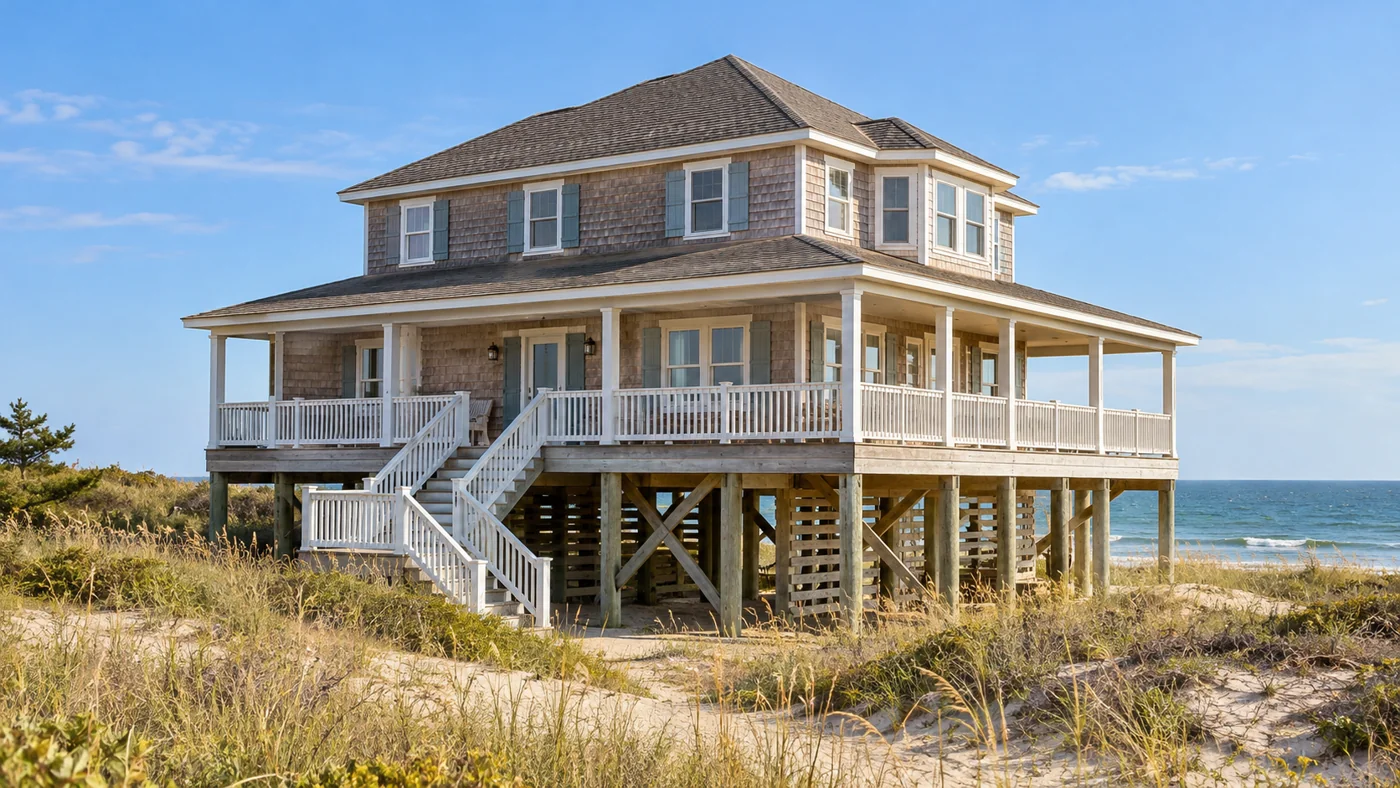
North Carolina coastal homes may need separate protection for the house, wind damage and flooding. A surplus homeowners policy is one possible option, but neither the word hurricane nor a coastal address tells you what is covered. Compare the actual forms, deductibles, insurer and lender requirements before replacing coverage.
Finding insurance near the North Carolina coast can take more preparation, especially after a nonrenewal or when a roof, claim history or rental use limits the usual options. A difficult application does not establish that the home is uninsurable. It means the coverage search needs accurate property information and a careful comparison of the available arrangements.
This guide focuses on the insurance decisions behind a coastal quote. It distinguishes private homeowners coverage, North Carolina’s Coastal Property Insurance Pool and separate flood insurance, while explaining the questions that matter before a storm approaches. Availability, pricing and acceptance remain specific to the home and the insurer.
Start with the layers of protection
Think about the policy arrangement as several responsibilities. One contract may protect against fire and other covered property losses, another may supply windstorm and hail coverage, and another may address flooding. Some insurers combine more of those responsibilities in one policy. You need the actual declarations and endorsements to know which arrangement you have.
The North Carolina Department of Insurance explains that wind and hail can be excluded from a primary residential policy. That makes a low premium less informative until you know which hazards it includes. Ask whether the quotation includes wind, excludes it entirely, or includes it with a distinct deductible and settlement provision.
Map the dwelling, detached structures, belongings, temporary housing and liability to the policy that is supposed to cover each exposure. An insured house does not necessarily mean the detached garage, dock, downstairs contents or rental income has comparable protection. Obtain a written explanation when the answer is unclear.
Also check effective dates. A package assembled from several policies needs coordinated start and renewal dates or a deliberate plan for any differences. Keep each insurer’s claims contact accessible outside the home.
Understand private insurance and the Coastal Pool
North Carolina has two distinct residual market associations. The NCJUA is known as the FAIR Plan. The NCIUA is known as the Coastal Property Insurance Pool and serves eligible properties in the Beach and Coastal Areas. Their names are not interchangeable, and neither is simply another name for surplus lines insurance. Their official website describes these separate roles.
A significant eligibility point applies to the NCIUA standalone windstorm and hail arrangement. NC DOI states that an applicant needs active primary coverage provided by an admitted North Carolina carrier that excludes windstorm. Do not assume that any surplus homeowners policy can automatically serve as the companion policy for NCIUA wind coverage. Have the agent confirm the proposed arrangement against the current rules.
Private admitted coverage, a qualifying association arrangement and a surplus policy can have different terms, deductibles and eligibility requirements. The useful comparison is the complete protection each arrangement provides, together with its total cost and administrative responsibilities. A familiar label is not a substitute for that comparison.
A request for alternatives should therefore identify what is currently insured and what is missing. Send the declarations, exclusions and renewal notice instead of describing the existing coverage only as beach insurance. That helps avoid replacing one necessary part while inadvertently losing another.
Read the hurricane and deductible wording
A hurricane can produce wind damage, wind-driven rain, storm surge and inland flooding. Those causes do not necessarily lead to the same insurance treatment. A policy called coastal homeowners insurance may still exclude flood and may restrict how water entering through the roof or walls is covered. Ask for the relevant exclusions and any exception for a covered opening caused by a storm.
The deductible label also matters. An all-perils deductible, wind or hail deductible and named storm deductible can apply under different circumstances. NC DOI explains common percentage deductible structures, but the actual contract determines the trigger and calculation for the quoted policy. Do not import the trigger from a previous policy into a new surplus form.
Hypothetical example: if a quoted deductible is two percent of a $500,000 dwelling limit, the arithmetic is $10,000. That is not two percent of the repair bill. This example illustrates the calculation only, not an available quote or a statement about every policy. Confirm the base amount, event definition and applicable endorsements.
Consider whether you could fund that deductible immediately after a storm. Compare a lower annual premium with the cash you would have to contribute to a claim. Ask about multiple deductibles when one event damages both the home and property insured under a separate flood policy.
Evaluate flood as a separate coverage decision
Storm surge and rising water deserve a separate review. The NCJUA and NCIUA explicitly state that they do not provide flood insurance. Ordinary homeowners coverage also does not generally insure flood damage. An agent should evaluate an NFIP policy or a suitable private flood option instead of assuming that wind coverage handles all hurricane losses.
A flood-zone determination used by a lender answers a particular financing question. It does not guarantee that a home outside a designated high-risk area cannot flood. NC DOI advises consumers not to make that assumption. Review the property’s elevation, drainage, history and location alongside its mapped designation. Describe any enclosure beneath an elevated house accurately.
Compare building and contents protection, deductibles, coverage for lower enclosures, loss settlement and additional living expense provisions. Do not assume that flood coverage mirrors the homeowners policy. Ask about waiting periods before setting an effective date, because buying just before a predicted storm may leave a gap.
Disclose prior water losses and completed work, including elevation changes or flood mitigation. If there are several buildings or an accessory apartment, identify each structure and use. Keep flood insurance in your renewal calendar even if it is billed separately or purchased through a different agent. Separate billing is easy to overlook during a mortgage or ownership change.
Still looking for a workable option?
An older roof, a nonrenewal, or a difficult property does not tell the whole story. Share the details so your available options can be evaluated.
Standard-market options are reviewed first. A request is an inquiry, not an offer or confirmation of insurance. Coverage is subject to underwriting.Build a stronger coastal application
A clear submission lets an underwriter evaluate the house that exists today. Gather the year built, roof installation information, roof material, plumbing and electrical updates, heating details, foundation type, square footage and photographs of each elevation. Identify attached and detached structures separately. For raised homes, provide the requested foundation and enclosure information without guessing.
If the roof was repaired after a storm, distinguish a localized repair from a full replacement. Include invoices, permits or inspection reports where available. A statement that the roof is new can be misleading if only one slope or section was replaced. Accurate records help avoid late underwriting questions and potential coverage disputes.
Describe occupancy precisely. A primary residence, family vacation home and short-term rental are different underwriting presentations. Give expected rental use, periods of absence, property management arrangements and any business activity. A home listed online for occasional rentals should not be described solely as owner occupied because family members also use it.
Also provide the current coverage and loss history, including open claims. Explain completed repairs with dates and documentation. If there is a closing or nonrenewal deadline, share it early and distinguish the requested effective date from the date you hope to receive a quote. An accurate deadline helps coordinate decisions without promising that an insurer will accept the risk.
Compare more than the dwelling limit
Two coastal policies can show the same dwelling amount and still produce substantially different outcomes. Examine roof settlement, water limitations, ordinance or law coverage, debris removal, additional living expenses and coverage for detached structures. Look for sublimits, percentage limits and endorsements that change the main form. Ask how replacement cost conditions are satisfied.
For older or distinctive homes, discuss the rebuilding estimate and any features that make reconstruction more complicated. The sale price and mortgage balance are not reliable substitutes for the cost to rebuild. A coastal home may also have site access or construction features that deserve attention in the estimate. Have the agent explain the assumptions rather than selecting a limit only to reach a desired premium.
Check whether personal liability fits the property’s use. Rental guests, pools, pets, boat access and other exposures should be disclosed. If an umbrella policy is involved, ask whether it accepts the underlying insurer and limits. A surplus property policy does not automatically satisfy every other insurance contract.
Finally, compare the complete annual cost and payment terms. Separate taxes, fees, financing charges and any minimum earned premium provision. Ask what happens to the premium if the home is sold or coverage is replaced midterm. The amount paid at inception is not always the same as the amount ultimately refundable.
Plan for storm restrictions and claims
Begin the insurance search well before a closing, renewal or expected storm. Insurers can impose binding restrictions when a storm threatens, and available timing depends on the company and the circumstances. A quote alone is not confirmation that coverage has started. Ask what must happen before an authorized binder or policy can be issued.
Keep current protection in place until replacement coverage is confirmed and any lender requirement is satisfied. If there are separate wind and flood policies, coordinate all necessary parts before cancelling one. Verify the precise date and time of inception. A cancellation submitted too early can turn an administrative change into an uninsured period.
After a loss, prioritize safety and follow local emergency instructions. Report the damage promptly, document conditions when safe, and take reasonable steps to prevent further damage without entering dangerous areas. Save receipts and photographs. Ask the insurer before discarding damaged materials or beginning permanent repairs that could affect its inspection.
Where wind and flood may both be involved, notify the relevant insurers and explain the uncertainty instead of choosing a cause yourself. Adjusters determine coverage under their contracts. Keep a shared timeline, photographs and communications organized, while ensuring each insurer receives the information it requests. A clear record helps the parties distinguish damage and respond efficiently.
Make the final coastal coverage decision
Before accepting an offer, ask the agent to describe the proposed arrangement in ordinary language: which insurer covers the home, whether wind is included, how flood is handled, and which deductibles apply. Identify any exposure that remains uninsured. If a carrier or association rejects a companion arrangement, resolve it before relying on the package.
Obtain lender approval when financing requires it. Provide the insurer name, declarations or binder, limits, deductibles, effective dates and mortgagee information requested by the lender. A verbal assurance that surplus coverage is always acceptable is not a substitute for approval of the actual policy.
Keep the application, quote, endorsements and payment records together. Review the issued policy promptly against the terms you accepted. Raise differences immediately, including an omitted detached structure, incorrect occupancy or unexpected exclusion. An early correction is usually easier to address than discovering a mismatch during a claim.
For broader context, review our FAIR Plan and Coastal Pool guide and quote comparison guide. The goal is a workable North Carolina coverage arrangement that you understand, can maintain and can afford to use.
Frequently asked questions
Does hurricane insurance include flood?
Not necessarily. A hurricane can cause several types of damage, and the policy responds according to the cause and its wording. Ordinary homeowners coverage generally excludes flood. Review separate flood protection and do not treat a named storm deductible as evidence that storm surge is insured.
Can a surplus policy be paired with NCIUA wind coverage?
Do not assume so. NC DOI says eligibility for the NCIUA standalone wind and hail policy requires active primary coverage from an admitted North Carolina carrier that excludes windstorm. Ask the agent to verify the current requirements and the exact proposed arrangement before binding.
Are the FAIR Plan and Coastal Pool the same program?
No. The NCJUA is the FAIR Plan, while the NCIUA is the Coastal Property Insurance Pool. They have distinct roles and eligibility rules. Neither association provides flood insurance. Use their current materials to determine which product, if any, fits the property.
Can I buy coverage when a hurricane is approaching?
An insurer may restrict new coverage or changes when a storm threatens. Flood waiting periods can also matter. Availability and timing are company and policy specific, so start early and obtain written confirmation of the effective date rather than relying on a quote alone.
Will a coastal roof replacement guarantee acceptance?
No. A documented replacement can help an insurer evaluate the risk, but location, construction, occupancy, claims and other factors still matter. Submit invoices and photographs and ask how the improvement affects the actual quote. Do not assume it eliminates a wind deductible or roof limitation.
What should I send for an initial coastal review?
Start with the property address, current declarations, any nonrenewal notice, roof information, occupancy and rental details, recent photographs, claims history and desired effective date. Identify separate wind and flood policies. Share mortgage requirements early if the review is connected to a purchase or refinance.
A clearer next step for your home.
Bring your coverage questions, property details, and deadline. Start a conversation about the options that may fit your situation.
Standard-market options are reviewed first. A request is an inquiry, not an offer or confirmation of insurance. Coverage is subject to underwriting.Sources and further reading
Official resources consulted for this guide. Program eligibility and policy wording can change; confirm the current requirements for your property.
- North Carolina DOI: Windstorm and Hail
- North Carolina DOI: Flood Insurance
- NCJUA / NCIUA: Association missions
- North Carolina DOI: Homeowners Insurance
Last source check: 2026-10-30. This guide is general information, not a coverage determination. Read our editorial standards.