In this guide
- Understand the North Carolina setting
- Confirm how the policy treats fire and smoke
- Describe access and fire protection accurately
- Create a practical mitigation record
- Disclose every use of the property
- Evaluate a surplus quote carefully
- Prepare for evacuation and a possible claim
- Organize the next coverage review
- Frequently asked questions
- Sources and further reading
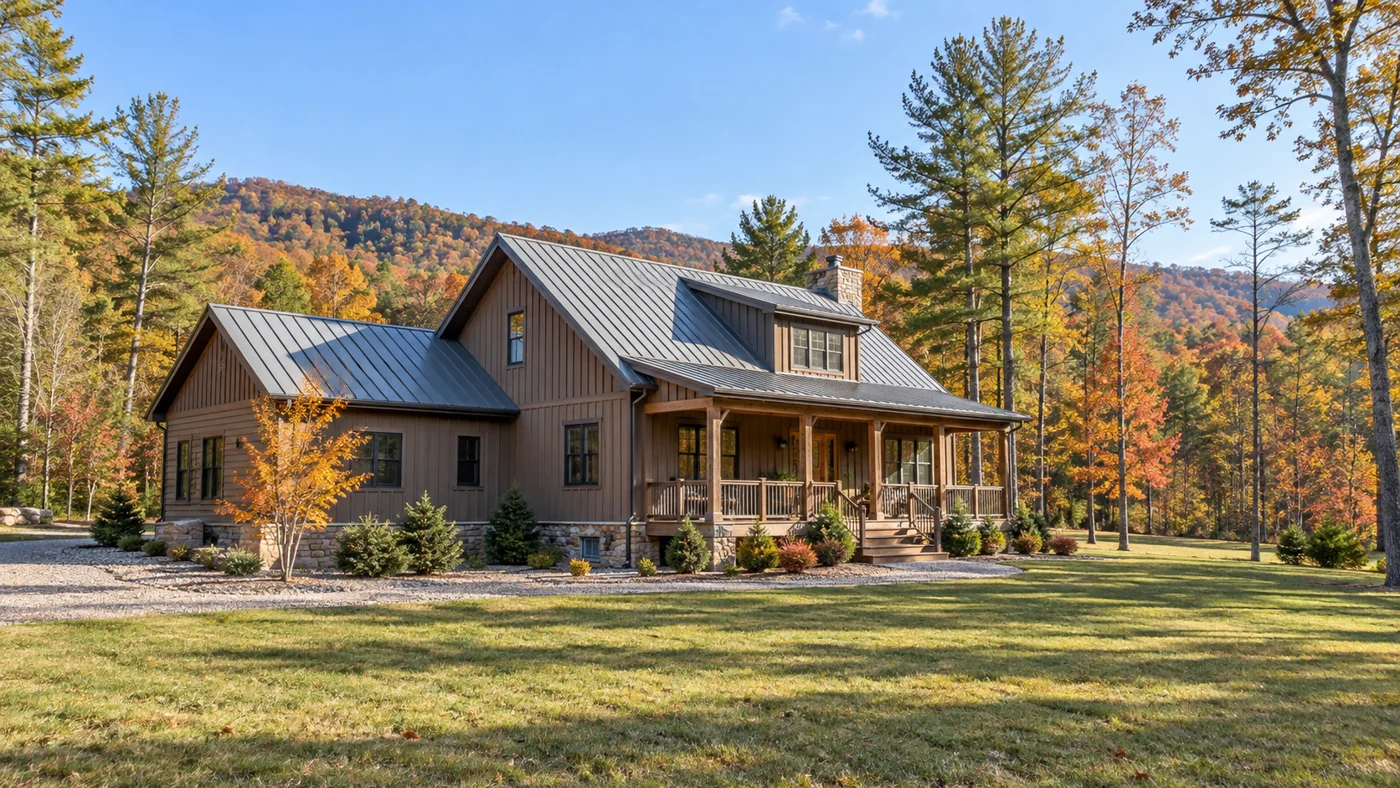
A North Carolina rural or wooded property may need closer underwriting review because of vegetation, access, fire protection or unusual structures. Fire coverage and policy terms must be checked directly. Surplus insurance may be one option when standard markets decline, but mitigation and accurate property records remain important parts of the application.
A home surrounded by woods can be a cherished place to live and a more complicated property to insure. A decline based on brush, remoteness or access does not tell the full story about the home or every insurer’s appetite. A careful submission can clarify both the risk and the steps already taken to reduce it.
This guide addresses North Carolina rural and wildfire-related insurance questions without treating every wooded property as the same. It separates loss prevention, underwriting eligibility and actual coverage, so you can ask for useful options and understand the protection being offered.
Understand the North Carolina setting
The North Carolina Forest Service describes the wildland urban interface as the area where development meets or mixes with wildland vegetation. That concept applies beyond remote mountain cabins. A home near wooded land can face questions about surrounding fuels even when it is part of a residential community.
The Forest Service works with fire departments and communities on prevention and preparation. Its resources are useful for understanding the property’s surroundings and discussing appropriate mitigation. They are not insurance endorsements or promises that a carrier will accept the home. Insurance underwriting and professional fire-risk assessment answer related but different questions.
Ask the insurer what specifically prompted a concern: vegetation near the building, a risk model result, road access, response capability, construction or another feature. A broad description such as wildfire risk can hide several distinct issues. Knowing the issue helps determine whether documentation, a correction or a different insurer is the next step.
Avoid assuming that an improvement to one feature resolves everything. Clearing an immediate area may not change regional fire exposure or a narrow access road. A useful application presents the whole property and the completed work accurately, allowing each underwriter to evaluate it under the company’s current rules.
Confirm how the policy treats fire and smoke
Fire is a common covered peril in property insurance, but the actual form and endorsements determine the scope of protection. Ask whether wildfire-related fire damage is included and whether any exclusion or special deductible applies. A policy’s availability for a rural address does not itself establish every detail of the coverage.
Review smoke damage, debris removal and additional living expenses as separate provisions. A temporary evacuation, nearby fire or smoke concern does not automatically trigger every benefit. Coverage can depend on insured damage, an applicable civil authority provision or other stated conditions. Ask for an explanation tied to the offered form.
Examine which structures are covered. A detached garage, workshop, barn or guest cabin may need specific scheduling or a different arrangement, especially if used for business or farming. A general other-structures limit does not necessarily insure every building and activity on the land. List structures and their actual use before requesting terms.
Also identify property that may have limited or no coverage, such as certain landscaping, stored equipment or materials outside buildings. Do not assume the dwelling amount protects the entire acreage and everything on it. A clear inventory makes the insurance discussion more precise and helps avoid misunderstandings after a loss.
Describe access and fire protection accurately
An underwriter may ask about the nearest responding fire department, road conditions, water availability and emergency vehicle access. Provide the requested information from reliable sources when possible. Do not guess travel distances or describe a private water feature as an approved firefighting supply unless that status is actually established.
For a private road, explain who maintains it and whether gates, bridges, steep grades or seasonal conditions affect access. Photographs can help show the setting, but they do not replace a professional evaluation of road or bridge suitability. If the insurer requests a particular inspection, ask what documentation it will accept.
Identify the home’s address clearly and discuss emergency access concerns with the appropriate local professionals. Insurance paperwork should reflect the actual property, not a nearby road entrance or another building’s location. Consistent address information also helps coordinate mortgage documents, claims and inspections.
If the insurer identifies an access problem, ask whether it is an eligibility requirement, a requested improvement or a pricing factor. Those are different outcomes. Before spending money, understand the required work and whether other underwriting concerns would remain. An agent can seek clarification, but cannot promise that a carrier will accept the risk after any single change.
Create a practical mitigation record
Use North Carolina Forest Service and qualified local guidance to plan mitigation appropriate to the site. Work may involve vegetation management, exterior maintenance, reducing combustible material near the building or improving access. The suitable approach depends on the structure and surroundings. Avoid undertaking hazardous tree, slope or electrical work without qualified help.
Document completed improvements with dated photographs, invoices and professional reports where available. Show the location and scope of the work rather than providing only a statement that the lot was cleared. Keep records of roof, siding, vent and deck upgrades if the underwriter asks about those features.
Ask whether an insurer recognizes a particular assessment or program before assuming it will change the quote. Community participation and documented improvements can be useful information, but they do not guarantee eligibility, a premium reduction or a specific deductible. Get the actual terms after the insurer reviews the evidence.
Maintenance is ongoing. Leaves, stored materials and vegetation can change conditions after an inspection. Keep a realistic schedule that fits the property and follow current restrictions on outdoor burning. The Forest Service’s outdoor fire guidance directs owners to check restrictions and obtain applicable permits rather than assuming burning is always allowed.
Still looking for a workable option?
An older roof, a nonrenewal, or a difficult property does not tell the whole story. Share the details so your available options can be evaluated.
Standard-market options are reviewed first. A request is an inquiry, not an offer or confirmation of insurance. Coverage is subject to underwriting.Disclose every use of the property
Rural properties often combine several activities. A residence may share land with a workshop, livestock, equipment storage, a business or a rental cabin. A standard homeowners description may not fit all of those exposures. Tell the agent what actually occurs on the premises, including occasional paid activity.
Separate personal use from business and farming operations. A hobby activity can raise different questions from selling products, hosting paying guests or employing workers. The right policy arrangement depends on the details. Do not assume that a surplus homeowners policy automatically replaces farm, commercial liability or workers’ compensation coverage.
For a cabin or second home, describe how often someone is present, how utilities are maintained and who checks the property during absences. If it is rented, explain the rental schedule and management arrangements. Seasonal vacancy, short-term rental and permanent occupancy are not interchangeable underwriting descriptions.
List detached dwellings and their occupants, including family members or tenants. Identify any separate address, utility meter or mortgage. This helps determine whether buildings should be insured together or separately and whether the proposed liability coverage fits. Our cabin and short-term rental guide addresses those occupancy questions in more detail.
Evaluate a surplus quote carefully
Surplus lines may provide an avenue for a property that does not fit standard underwriting, but the quote still needs a full review. Ask what concern the proposed insurer is willing to accept and which conditions it imposes. A policy may require completed work, an inspection or documentation before or after inception.
Compare the dwelling limit, other structures, belongings, additional living expenses and liability. Review fire, smoke, water and wind provisions rather than focusing only on the wildfire concern that started the search. A solution to one eligibility problem can introduce a limitation elsewhere. Request the endorsements that explain those differences.
Check replacement cost assumptions for remote construction, distinctive materials and difficult site access. The price paid for the property may include substantial land value and is not the same as the cost to rebuild the house. Ask how the estimate was developed and whether the policy includes any extension or ordinance coverage relevant to rebuilding.
Review insurer status and financial information, total taxes and fees, deductibles and cancellation terms. Surplus coverage is not protected in the same way as an admitted policy through state guaranty mechanisms. Read our surplus insurer review guide for the status and financial questions to address before accepting an offer.
Prepare for evacuation and a possible claim
Keep an insurance record that remains accessible if you cannot enter the home. Include declarations, policy numbers, claims contacts, a home inventory and photographs. Store copies securely away from the property or in an appropriate digital location. Update the inventory after major purchases or building changes.
Follow evacuation orders and emergency instructions. Do not remain at a property or reenter an unsafe area to obtain photographs for an insurer. When it is safe to document damage, record conditions before cleanup and retain receipts for necessary temporary measures. Ask the insurer about inspections and its instructions before permanent repairs.
If the home is inaccessible or uninhabitable, ask which expenses the policy may reimburse and under what conditions. Keep lodging and meal records, but do not assume every evacuation cost is covered. Explain whether there is insured physical damage, an access restriction or another reason for displacement.
Report the loss promptly and accurately. If several structures or policies are involved, identify each one. Ask for a written coverage explanation when an item is disputed. Clear documentation cannot guarantee payment, but it gives the insurer the facts needed to evaluate the contract and helps you understand the decision.
Organize the next coverage review
Begin with the existing declarations and any nonrenewal or underwriting notice. Add construction details, roof records, photographs, claims history, occupancy information and a list of outbuildings. Include completed mitigation documentation. Identify uncertain facts for verification instead of filling gaps with optimistic assumptions.
Tell the agent the coverage deadline and whether the home has a mortgage. Ask for a comparison that identifies required repairs, excluded hazards, deductible amounts and the full annual cost. If the lender needs specific insurer or coverage information, share those requirements before selecting a policy.
Do not cancel an existing contract based only on a quote or an expectation that work will be accepted. Confirm that the replacement can be bound and that any necessary conditions are satisfied. Keep track of inspection deadlines after inception as well as the initial payment date. A missed follow-up requirement can create another coverage problem.
At renewal, update the submission to reflect meaningful changes. New mitigation, repaired damage or a different occupancy pattern may affect the options, while vegetation growth or added activities may require disclosure. A difficult placement deserves a repeatable review process. Accurate records and direct questions make it easier to seek appropriate coverage without relying on guarantees.
Frequently asked questions
Does homeowners insurance cover wildfire?
Fire is commonly an insured peril, but the policy and endorsements determine whether and how wildfire-related damage is covered. Ask about exclusions, deductibles, smoke, debris removal and loss of use. Do not infer complete protection from a general homeowners label or the fact that the insurer accepted the address.
Will clearing brush guarantee that an insurer accepts my home?
No. Vegetation may be only one underwriting factor. Access, construction, fire protection, regional models and other conditions can still matter. Ask what the insurer requires before undertaking work solely for insurance and provide documentation after improvements are completed.
Does my homeowners policy cover a barn or workshop?
It depends on the building, its use and the policy. Business, farming, rental and equipment exposures can need a separate arrangement. List every structure and activity rather than assuming the other-structures limit covers everything located on the acreage.
Is rural insurance the same as farm insurance?
No. A rural residence may need ordinary homeowners, dwelling, specialty or surplus coverage, while farming activities can create different property and liability needs. Explain the actual use of the land and buildings so the agent can evaluate the appropriate combination of policies.
Are evacuation expenses always covered?
No. Additional living expense and civil authority provisions have conditions, limits and covered causes. Ask how the policy responds when there is insured damage, an access restriction or an evacuation without damage to the home. Keep receipts and follow safety instructions regardless of coverage.
What information helps after a brush-related nonrenewal?
Provide the notice, effective date, current coverage, photographs, roof and construction details, occupancy, outbuilding uses, claims history and any mitigation records. Ask which specific concern drove the decision. That creates a clearer starting point for evaluating repairs or alternative insurers.
A clearer next step for your home.
Bring your coverage questions, property details, and deadline. Start a conversation about the options that may fit your situation.
Standard-market options are reviewed first. A request is an inquiry, not an offer or confirmation of insurance. Coverage is subject to underwriting.Sources and further reading
Official resources consulted for this guide. Program eligibility and policy wording can change; confirm the current requirements for your property.
- North Carolina DOI: Homeowners Insurance
- North Carolina Forest Service: Wildland Urban Interface
- North Carolina Forest Service: Fire Safety Outdoors
Last source check: 2026-10-30. This guide is general information, not a coverage determination. Read our editorial standards.