In this guide
- Start with an accurate description of the rental operation
- Check whether the proposed policy permits paying guests
- Treat booking-platform protection as a separate contract
- Protect the cabin, furnishings and outdoor features
- Review guest liability and amenities before opening dates
- Distinguish covered rental-income loss from cancelled bookings
- Evaluate mountain and coastal hazards on their own terms
- Plan for empty periods, winterization and renovation
- Prepare a submission that explains the difficult details
- Walk through a real-world coverage scenario before deciding
- Complete the handoff before taking the next reservation
- Frequently asked questions
- Sources and further reading
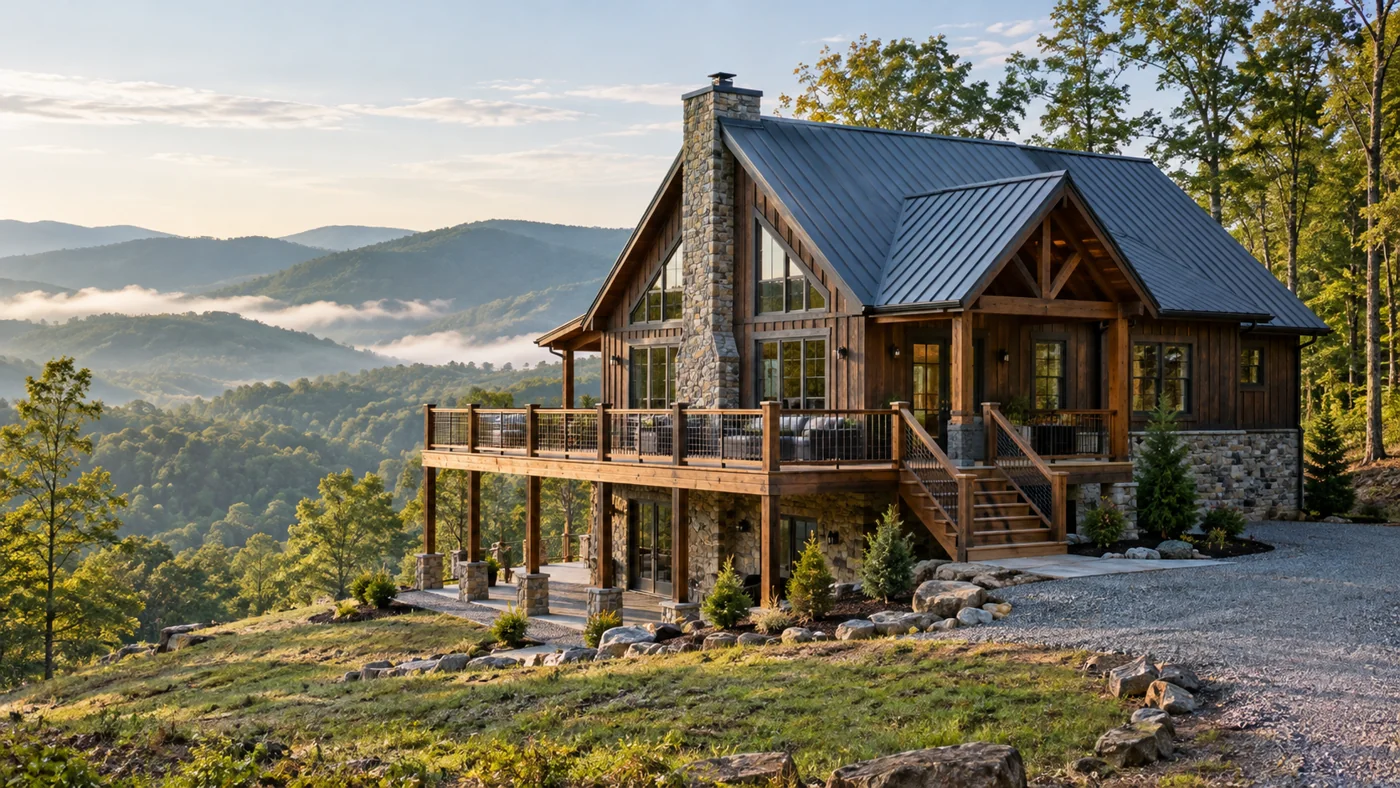
A North Carolina short-term rental needs insurance that expressly accepts paying guests and the way the property is operated. A second-home policy or platform protection may leave important gaps. Evaluate property coverage, guest-related liability, lost rental income and regional hazards together, with surplus options considered when appropriate.
A mountain cabin rented on weekends and a coastal cottage booked throughout summer have more in common than their different scenery suggests: both need insurance based on what actually happens at the property. Owner visits, guest turnover, amenities and management arrangements all matter.
A difficult location or a prior decline does not automatically end the search. It does mean the submission should explain the home clearly. The goal is a policy that fits the rental activity, with limitations you understand before a guest arrives.
Start with an accurate description of the rental operation
Tell the agent how many nights the home is offered for rent, typical stay length, maximum occupancy and whether the entire property or individual rooms are rented. Include periods reserved for your own use. A home occupied personally part of the year may still have substantial rental exposure during the remaining months.
Explain how reservations are accepted, whether you use multiple platforms, and whether direct bookings are allowed. Disclose weddings, events, retreats or other activities even when they happen only occasionally. An insurer considering ordinary overnight stays may evaluate organized events very differently.
Provide the property manager’s role, the cleaning schedule, how guests receive access, and who responds to emergencies. These details help distinguish a managed operation from a house that sits unattended between visits. They also help you identify practical responsibilities that no insurance policy can perform for you.
Check whether the proposed policy permits paying guests
NC DOI describes homeowners insurance as a package generally oriented toward owner-occupied homes, while its dwelling-policy guidance identifies rental, seasonal and vacation uses as situations where a dwelling form may fit. That does not mean every dwelling policy allows short stays. Ask the insurer to accept the exact arrangement.
Read rental restrictions, business exclusions and occupancy definitions in the proposed policy. A quote that simply says “secondary home” does not answer whether weekly paying guests are allowed. If an endorsement is needed, obtain its name and terms rather than relying on an informal assumption.
The correct structure may be a personal-lines form with a suitable endorsement, a specialized rental package, or another policy appropriate to the operation. Surplus markets may consider homes that do not fit standard guidelines, but their willingness to quote does not establish that every requested coverage is included.
Treat booking-platform protection as a separate contract
Booking services may offer protection with their own eligibility rules, definitions, claim procedures, exclusions and limits. Do not assume a platform’s protection replaces the property owner’s insurance or applies to every booking. Read the current terms for each service you use and give relevant documents to your agent.
Ask what happens to direct reservations, bookings taken through another service, owner stays and periods when the house is empty. Clarify whether a guest damage program, liability arrangement, deposit or reimbursement process is involved. Similar marketing names can describe very different obligations.
Keep your own insurance decision independent of a platform badge. A hypothetical example: a cabin is damaged between two reservations, and nobody can establish which guest caused the problem. Whether a platform responds and whether an insurance policy responds are separate questions. Coordinated contracts are more useful than assuming one automatically fills every gap in another.
Protect the cabin, furnishings and outdoor features
Supply a rebuilding estimate that reflects the structure’s actual construction. Log walls, custom woodwork, elevated foundations, stone chimneys and steep-site access can complicate replacement. The purchase price and nightly rental rate are not substitutes for a reconstruction estimate. Ask how the estimate handles debris removal and code-related work.
Inventory furniture, appliances, linens, electronics and owner supplies. Review contents limits, settlement method and theft restrictions. Damage caused by a guest, ordinary wear, staining, breakage and intentional acts are not interchangeable, and the applicable coverage depends on the form.
List detached structures and features separately: a garage apartment, boathouse, dock, shed or hot-tub enclosure may need specific treatment. Explain whether guests use them. A photograph can show an attractive deck while missing the larger question of whether the detached cabin behind it is also part of the rental business.
Review guest liability and amenities before opening dates
Ask whether the liability policy covers the named owner and the disclosed short-term rental operation. Verify how a property manager, co-owner, LLC or trust should be identified. A management agreement may allocate responsibilities, but it does not automatically change an insurer’s obligations.
Discuss pools, hot tubs, fire pits, wood stoves, fireplaces, water access, boats, steep paths, bunk beds and recreational equipment. Do not assume an umbrella overrides an exclusion in the underlying coverage. Some features may require safeguards, separate coverage, a higher deductible, or an insurer willing to accept them.
Maintain inspection records and written procedures for cleaning, smoke alarms, locks, railings and emergency information. Ask qualified professionals about property-specific safety concerns. These practices support responsible operation, but a checklist does not guarantee that an injury will be covered or that a guest cannot bring a claim.
Distinguish covered rental-income loss from cancelled bookings
A damaged vacation rental can lose income while still generating loan payments, taxes and management expenses. Ask whether the policy covers rental income after insured physical damage, what calculation is used, and how long payments can continue. A stated annual income figure is not itself a promise to reimburse that amount.
Keep reservation records, cancellation history, occupancy calendars, management statements and expenses. Seasonal income makes the timing of a loss important. A week in peak season may not resemble a week in winter, but the insurer applies the policy’s method rather than simply multiplying the highest nightly rate.
Weather-related cancellations without covered property damage, lost demand after a regional event, inaccessible roads, utility outages and civil-authority restrictions need separate review. Ask which of those situations are addressed and under what conditions. Flood-related interruption also should not be assumed covered merely because a separate flood policy exists.
Still looking for a workable option?
An older roof, a nonrenewal, or a difficult property does not tell the whole story. Share the details so your available options can be evaluated.
Standard-market options are reviewed first. A request is an inquiry, not an offer or confirmation of insurance. Coverage is subject to underwriting.Evaluate mountain and coastal hazards on their own terms
For a mountain cabin, describe road access, slope, water supply, distance from responding fire protection, vegetation, heating and whether the home is accessible during severe weather. A remote location can affect inspection, emergency response and rebuilding logistics. Do not reduce the discussion to a single distance measurement.
For a coastal rental, confirm wind coverage, named-storm or wind deductibles, flood and any restrictions affecting lower enclosures or detached property. Wind-driven rain and rising water are not necessarily treated the same. Ask how the policy defines the cause of loss and where exclusions apply.
North Carolina’s flood guidance warns against assuming that property outside a designated floodplain cannot flood. Inland locations need this review too. Streams, surface runoff and the terrain around a cabin can matter even when an ocean is far away.
Plan for empty periods, winterization and renovation
Tell the insurer when the property will be unused, how often someone checks it, and whether utilities remain on. Vacancy and unoccupancy are defined by the contract, not simply by whether the owner considers the property available for rent. Ask how the policy handles long gaps between bookings.
Discuss freezing and water-loss conditions before closing a cabin for winter. A remote temperature alert may be useful, but verify whether someone can respond if an alarm occurs. Give the insurer accurate information about heat, water shutoff, drainage and inspections. Do not represent a system as monitored if no response process exists.
Notify the agent before adding rooms, replacing a deck, removing a roof or undertaking substantial renovations. A rental policy on a completed building may not fit the construction stage. Review vacant and renovation insurance and obtain any necessary changes before the work begins.
Prepare a submission that explains the difficult details
| Information | Why it helps |
|---|---|
| Rental calendar and stay lengths | Shows the actual mix of personal and guest use. |
| Interior and exterior photographs | Documents condition, amenities and construction. |
| Roof and system records | Supports accurate ages and completed improvements. |
| Management and emergency arrangements | Explains oversight between stays. |
| Loss history and repairs | Separates a past event from an unresolved condition. |
Provide prior declines or nonrenewal notices without guessing at the insurer’s reasoning. If a concern can be corrected, ask what documentation the new underwriter would need. Do not undertake expensive changes solely on an unconfirmed promise that coverage will follow.
Compare the total proposal, including taxes, fees, deductibles and cancellation terms. If the property will be sold soon or the rental season is short, ask whether a minimum earned premium applies. A short period of use does not necessarily create a proportionally short insurance cost.
Walk through a real-world coverage scenario before deciding
Use a hypothetical incident to test whether the proposal answers your concerns. Suppose a guest accidentally starts a kitchen fire, the house needs repairs, and three upcoming reservations must be cancelled. Ask the agent which section addresses the building, furnishings, rental income and any injury allegation. The answers may involve different limits and deductibles.
Then change one fact: a pipe leaks slowly between reservations instead of a sudden fire occurring. Coverage may change because the cause, timing, discovery and maintenance conditions differ. This exercise is not a claim prediction. It helps expose exclusions that a premium comparison alone would miss.
Finally, ask what happens if the same event occurs during your own stay or while the house is being renovated. Confirm that the accepted use and policy period match those circumstances. Keep the explanations with the quoted forms and ask the agent to point out the provisions supporting them.
If a gap remains, decide whether another product, a different operating practice or a financial reserve is appropriate. Some risks may be difficult to insure on acceptable terms. Knowing that before taking bookings gives you a practical decision, rather than an assumption that every loss connected to the rental must be covered.
Complete the handoff before taking the next reservation
Confirm the named insured, property address, permitted rental operation, effective date and required payments. Review any outstanding inspection or documentation conditions. A quote is not proof that coverage has been bound, and a completed application is not necessarily a binder.
Coordinate evidence with your lender and manager. Keep a copy of the policy and claims instructions somewhere accessible if you cannot reach the property. Make sure the person checking the home knows how to report damage promptly and preserve photographs or receipts.
At renewal, explain changed amenities, more frequent bookings, direct reservations or additional rental units. If the home is becoming a private second residence, say so. An accurate annual review can reveal suitable options as circumstances change, while avoiding the larger problem of an insurer evaluating an operation different from the one you actually run.
Frequently asked questions
Does a vacation-home policy automatically cover short-term guests?
No. The insurer must accept the rental activity. Tell the agent the stay lengths, booking channels, frequency and amenities. Ask for the policy or endorsement that permits that use, not simply a general description of second-home insurance.
Can I rely only on a booking platform’s protection?
Review the platform’s current contract and compare it with your own insurance. Coverage, eligible reservations, claim requirements and exclusions vary. Direct bookings and time between reservations may be treated differently, so do not assume the platform replaces an owner’s policy.
Will insurance pay when guests cancel because of a storm?
Not automatically. Rental-income coverage has specified triggers and conditions. A cancellation without covered damage may fall outside it. Ask separately about utility interruption, access restrictions, civil-authority provisions and flood, and request the applicable wording.
Can a remote North Carolina cabin get surplus coverage?
It may be considered by a suitable market, depending on condition, access, fire exposure, construction and use. Accurate photographs and maintenance records help the review. Availability and terms remain subject to underwriting, so a quote cannot be promised.
Should I disclose a hot tub, fire pit or guest boat?
Yes. Explain every amenity and how guests use it. Liability or property exclusions may apply, and separate coverage or safeguards may be needed. Do not assume an umbrella or management agreement removes those restrictions.
What if I use the cabin personally and rent it occasionally?
Describe both uses and their frequency. Mixed use is an underwriting fact, not a reason to omit rental activity. An agent can ask which form or endorsement fits the arrangement and how the policy applies between visits and bookings.
A clearer next step for your home.
Bring your coverage questions, property details, and deadline. Start a conversation about the options that may fit your situation.
Standard-market options are reviewed first. A request is an inquiry, not an offer or confirmation of insurance. Coverage is subject to underwriting.Sources and further reading
Official resources consulted for this guide. Program eligibility and policy wording can change; confirm the current requirements for your property.
Last source check: 2026-10-30. This guide is general information, not a coverage determination. Read our editorial standards.