In this guide
- Ask how this policy defines vacancy and unoccupancy
- Describe the reason, duration and condition of the vacancy
- Separate light repairs from major construction
- Review the building, materials and theft protection
- Keep owner liability separate from contractor obligations
- Plan for weather and water during vulnerable stages
- Turn policy conditions into an achievable maintenance plan
- Review the cost of a policy you may need only temporarily
- Coordinate with the lender and any existing claim
- Use a project log to support an accurate insurance review
- Arrange the next policy before the project ends
- Frequently asked questions
- Sources and further reading
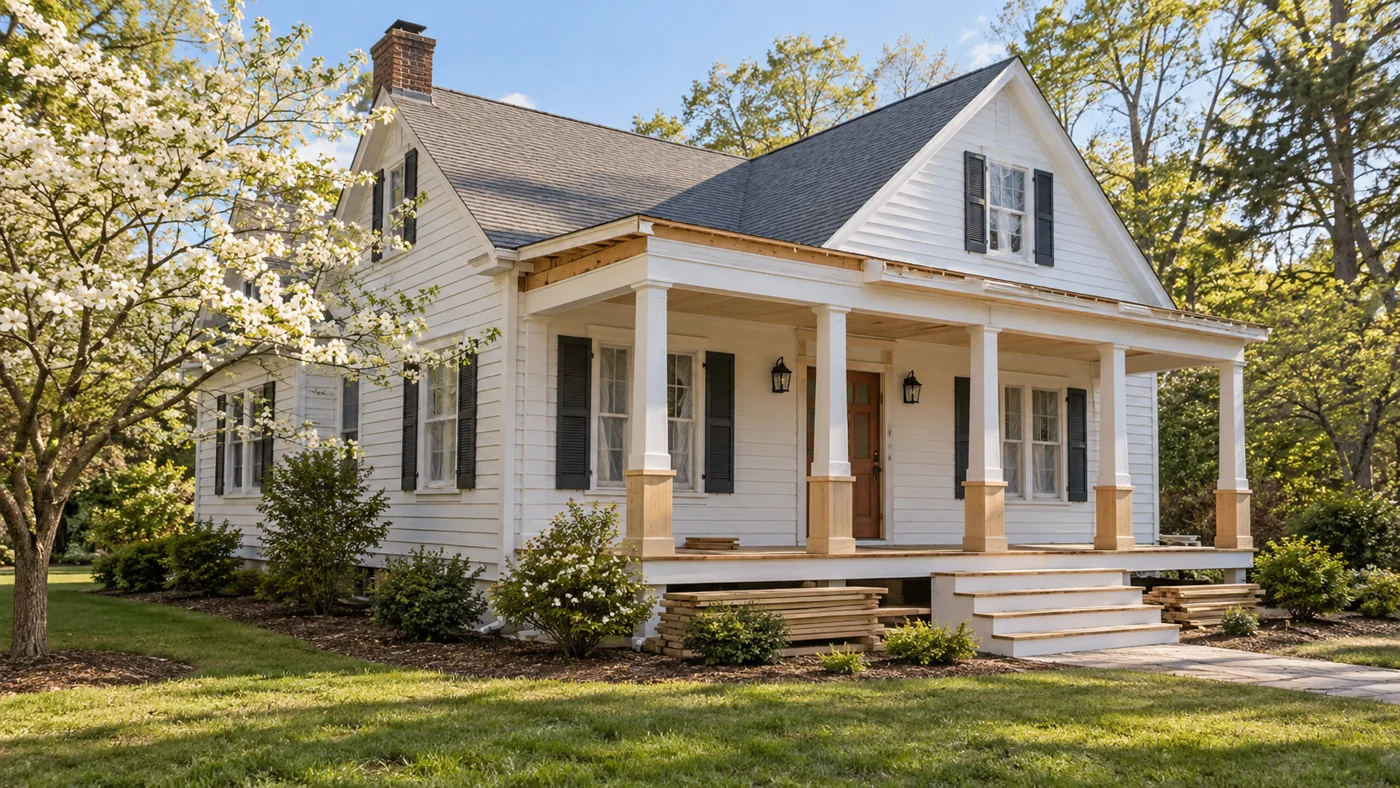
A vacant or substantially renovated North Carolina house may need coverage different from an occupied homeowners policy. Tell the insurer when occupancy stops and what work is planned. Review vacancy provisions, construction eligibility, theft, vandalism, water damage and liability before the change, then confirm coverage for the completed home.
A house may become vacant for a perfectly ordinary reason: a move, an estate, a sale, a delayed tenant, or a renovation that makes living there impractical. The insurance problem begins when the policy still describes an occupied, completed home while the real situation has changed.
A decline from the current insurer does not mean the property is impossible to insure. The next step is to describe the vacancy or construction clearly so an agent can identify options suited to that stage, including surplus coverage when appropriate.
Ask how this policy defines vacancy and unoccupancy
Different contracts can treat vacancy and unoccupancy differently. Furniture, utilities, personal belongings, the absence of residents and the building’s intended use may all matter. Do not assume that leaving a bed in the house automatically preserves every coverage or that visiting once a week makes the home occupied.
Ask the insurer which conditions change coverage, when they begin to apply and which causes of loss are affected. Theft, vandalism, water damage and freezing may be treated differently from fire. Obtain the applicable wording so you can understand the actual restriction rather than relying on a remembered number of days.
NC DOI’s dwelling-policy guide includes vacant homes among possible uses for dwelling coverage. It also shows that different forms provide different protections. A dwelling policy is not automatically a vacancy permission; the insurer must accept the condition and intended use.
Describe the reason, duration and condition of the vacancy
Explain when the last resident left, why the property is empty, whether it is listed for sale or rent, and the expected next use. Give a realistic timeline. If the duration is uncertain, say so instead of presenting a firm occupancy date that has no supporting plan.
Describe utilities, heat, water, locks, alarms, inspections and who has access. Include current photographs of every side of the building, the interior and any damaged areas. If a roof leak or other problem remains unresolved, disclose it. A new policy is not intended to fund a loss that already happened.
For estates or ownership changes, provide accurate ownership information and identify who has authority to request coverage. An agent may need documentation to determine the correct named insured and interested parties. Do not leave a deceased or former owner as the only identified insured without having the arrangement reviewed.
Separate light repairs from major construction
Painting a room and replacing cabinets are different from removing the roof, altering structural walls or rebuilding after a major loss. Describe the full project, its budget, permits, contractor, schedule and whether anyone will live there during the work. Photographs and a written scope help avoid assumptions.
Ask whether the existing insurer accepts the work, requires an endorsement, or expects a different policy. A builder’s-risk or renovation product may address construction exposures, but its terms vary. Confirm whether the existing structure, new work, materials and temporary structures are insured.
Do not wait until demolition to discover that a quote assumed a completed house. If plans expand, tell the agent before the additional work begins. A project that started as a bathroom update can become a longer period without working plumbing, heat or occupancy, changing the facts that supported the original insurance decision.
Review the building, materials and theft protection
Determine the value being insured at each stage. The current structure, the value of completed improvements and the cost of materials awaiting installation may need different treatment. Ask whether the limit reflects the completed project and whether reporting or adjustment is required as work progresses.
Construction materials are not always covered wherever they happen to be stored. Discuss deliveries at the site, storage away from the premises and materials in transit. Identify who owns them and when your contractual responsibility begins. The contractor’s insurance and the owner’s policy should be coordinated, not assumed interchangeable.
Check theft and vandalism explicitly. Open access, removed doors, vacant rooms and unsecured equipment create practical concerns, but the policy decides which losses are covered. Ask about security requirements and exclusions, and keep delivery records, photographs and invoices so that ownership and value can be documented if a covered loss occurs.
Keep owner liability separate from contractor obligations
A property policy may protect insured physical property without providing all necessary liability protection. Ask whether premises liability remains in force during vacancy and the planned work. NC DOI explains that dwelling coverage typically does not package liability in the same way as homeowners insurance, making this a specific question to resolve.
Ask contractors for current evidence of the insurance appropriate to their work, and have a qualified adviser review contractual risk allocation when needed. A certificate is evidence of identified coverage; it does not itself rewrite a policy or guarantee every injury or damage claim will be covered.
Explain if you are doing work yourself, hiring individual trades directly or acting as project manager. Those arrangements can create different exposures from hiring one general contractor. Avoid assuming that your personal umbrella fills construction-related gaps. Confirm the underlying policy, location, insured parties and activities that the umbrella accepts.
Plan for weather and water during vulnerable stages
A house with part of its roof removed or openings in exterior walls is more vulnerable during storms. Ask how the policy addresses rain entering during construction and what protective measures are required. Schedule and temporary protection belong in both the construction plan and the insurance discussion.
Review wind, hail and named-storm deductibles separately from the ordinary property deductible. For a coastal project, ask whether the proposed wind arrangement remains available during vacancy or major work. Do not assume eligibility for a completed-home product automatically continues throughout construction.
Flood, sewer backup, leaking pipes and water entering through an opening are different issues. NC DOI’s flood guidance explains that homeowners coverage does not cover flood damage. If flood coverage is proposed during construction, have the agent verify its eligibility, effective date and stage-specific limitations too.
Still looking for a workable option?
An older roof, a nonrenewal, or a difficult property does not tell the whole story. Share the details so your available options can be evaluated.
Standard-market options are reviewed first. A request is an inquiry, not an offer or confirmation of insurance. Coverage is subject to underwriting.Turn policy conditions into an achievable maintenance plan
Identify any required inspection frequency, heating procedure, water shutoff, security system or deadline for repairs. Determine who will perform each task and how it will be documented. A condition that sounds simple in a quote can become difficult if the owner lives several hours away.
Keep a dated log of visits, photographs, completed repairs and communication with the agent. If a monitoring system fails or a contractor delays work, report a change that could affect the agreed conditions. Do not create a retrospective log or describe checks that did not actually occur.
The purpose is to keep facts accurate and prevent damage where possible. Meeting a maintenance routine does not guarantee payment for an excluded loss. Conversely, discovering an incident should prompt timely reporting and safe mitigation rather than speculation about whether the policy will respond. Keep receipts for reasonable protective work and follow the insurer’s instructions.
Review the cost of a policy you may need only temporarily
Ask about the policy term, extensions, minimum earned premium, inspection charges, policy fees and cancellation calculation. A six-month project does not necessarily produce a six-month refundable cost. If financing is involved, understand the payment agreement and what happens if the policy ends before the finance contract is fully paid.
Construction timelines slip. Confirm how to request an extension before the policy expires and whether additional information or premium will be required. A renewal or extension should not be assumed automatic, especially if the project has changed or the structure remains unfinished.
Compare quotes using the same scope, completed value and intended occupancy. A cheaper offer for an empty building without active construction is not equivalent to coverage accepting structural renovation. Use the quote comparison guide and ask the agent to identify the material differences in writing.
Coordinate with the lender and any existing claim
Tell the lender about the proposed insurance arrangement and obtain its requirements early. A lender may require particular limits, deductibles, insurer characteristics or evidence of coverage. Its acceptance does not establish that the policy covers every personal concern, but failing to coordinate can delay financing or create an avoidable problem.
If the renovation follows a loss, keep the existing claim and new coverage discussion separate. A replacement policy does not retroactively cover the earlier event. Describe unrepaired damage and the claim status accurately, including any temporary repairs and ongoing exposure.
Do not cancel an existing policy solely because an application or quote has been submitted. Confirm binding, dates and payment, then coordinate any cancellation to avoid an unintended gap. Ask how overlapping construction and property policies should be handled, rather than assuming that two declarations pages automatically improve protection.
Use a project log to support an accurate insurance review
Create a simple record of the property’s condition when the policy begins. Include photographs, the contractor’s scope, the expected completion date and the current state of utilities. Update it when significant work is completed or the plan changes. This gives both you and the agent a reliable description of the stage being insured.
Record temporary roof openings, material deliveries, system shutdowns and periods without contractor activity. A delay may leave the structure in a more exposed condition than originally expected. Share changes that affect underwriting instead of waiting for the next renewal questionnaire.
Keep invoices for work that corrects a prior underwriting concern. A full roof replacement, completed electrical update or repaired water intrusion should be described precisely, with dates and scope. Avoid describing a partial repair as a complete system replacement. Accurate evidence may help future reviews, although it does not guarantee acceptance.
As completion approaches, make a separate list of unfinished items and the intended occupancy date. The agent can use it to evaluate the transition to permanent coverage. A project log also helps distinguish new damage from the condition documented at policy inception, without turning ordinary construction defects or pre-existing damage into an assumed covered claim.
Arrange the next policy before the project ends
| Next use | Coverage discussion |
|---|---|
| Owner moves in | Completed primary-residence policy and updated reconstruction estimate. |
| Tenant moves in | Landlord coverage, premises liability and rental income. |
| Vacation rental begins | Approved short stays, guest liability and booking activity. |
| Home remains for sale | Continued vacancy acceptance until ownership changes. |
Provide completion photographs, final inspections when applicable and records of roof or system work. Confirm when the construction policy ends and the permanent policy begins. Do not assume a certificate of occupancy, first night in the house or last contractor invoice is the automatic insurance transition date.
Keep the final policy documents with the renovation file. The improvements may support a different underwriting assessment later, but they must be accurately documented. If the house will be rented, review landlord coverage before handing over keys.
Frequently asked questions
How long can a North Carolina house be empty before coverage changes?
Check the exact policy. Definitions, time periods and affected causes of loss vary. Do not apply one insurer’s rule to another contract. Notify the agent before moving out and ask for the applicable vacancy or unoccupancy wording.
Does leaving furniture in the home prevent vacancy problems?
Not necessarily. The insurer’s definitions and the actual occupancy facts matter. Describe who lives there, what remains inside and how the home is maintained. Furniture alone is not a reliable substitute for written confirmation of coverage.
Is builder’s risk the same as homeowners insurance?
No. It is designed around particular construction exposures and has its own terms, exclusions and ending conditions. Ask whether the existing structure, new work, materials and liability are addressed. The name alone does not establish the full coverage package.
Can I insure a vacant house with unrepaired damage?
Some situations may be considered, but the damage and planned repairs must be disclosed. New insurance will not retroactively pay for a known earlier loss. Eligibility depends on the condition, construction stage and available markets.
Does my contractor’s policy replace my own insurance?
Do not assume so. Contractor liability, workers’ compensation, owner premises liability and coverage for the building serve different purposes. Review the contracts and insurance arrangements with qualified advisers so responsibilities and gaps are understood.
What if the renovation takes longer than expected?
Contact the agent before expiration or a significant project change. An extension may require updated photographs, revised values, underwriting approval or additional premium. Keep the policy effective throughout the actual construction and transition period.
A clearer next step for your home.
Bring your coverage questions, property details, and deadline. Start a conversation about the options that may fit your situation.
Standard-market options are reviewed first. A request is an inquiry, not an offer or confirmation of insurance. Coverage is subject to underwriting.Sources and further reading
Official resources consulted for this guide. Program eligibility and policy wording can change; confirm the current requirements for your property.
Last source check: 2026-10-30. This guide is general information, not a coverage determination. Read our editorial standards.