In this guide
- Describe who occupies the home and how it is rented
- Separate the building from belongings and rental income
- Compare the policy form and endorsements, not just the label
- Confirm landlord liability and who is insured
- Understand when lost rental income is covered
- Review North Carolina wind and flood arrangements carefully
- Give underwriters a clear record of the property
- Compare the complete landlord insurance proposal
- Plan the insurance handoff between tenants
- Update coverage when the rental changes
- Frequently asked questions
- Sources and further reading
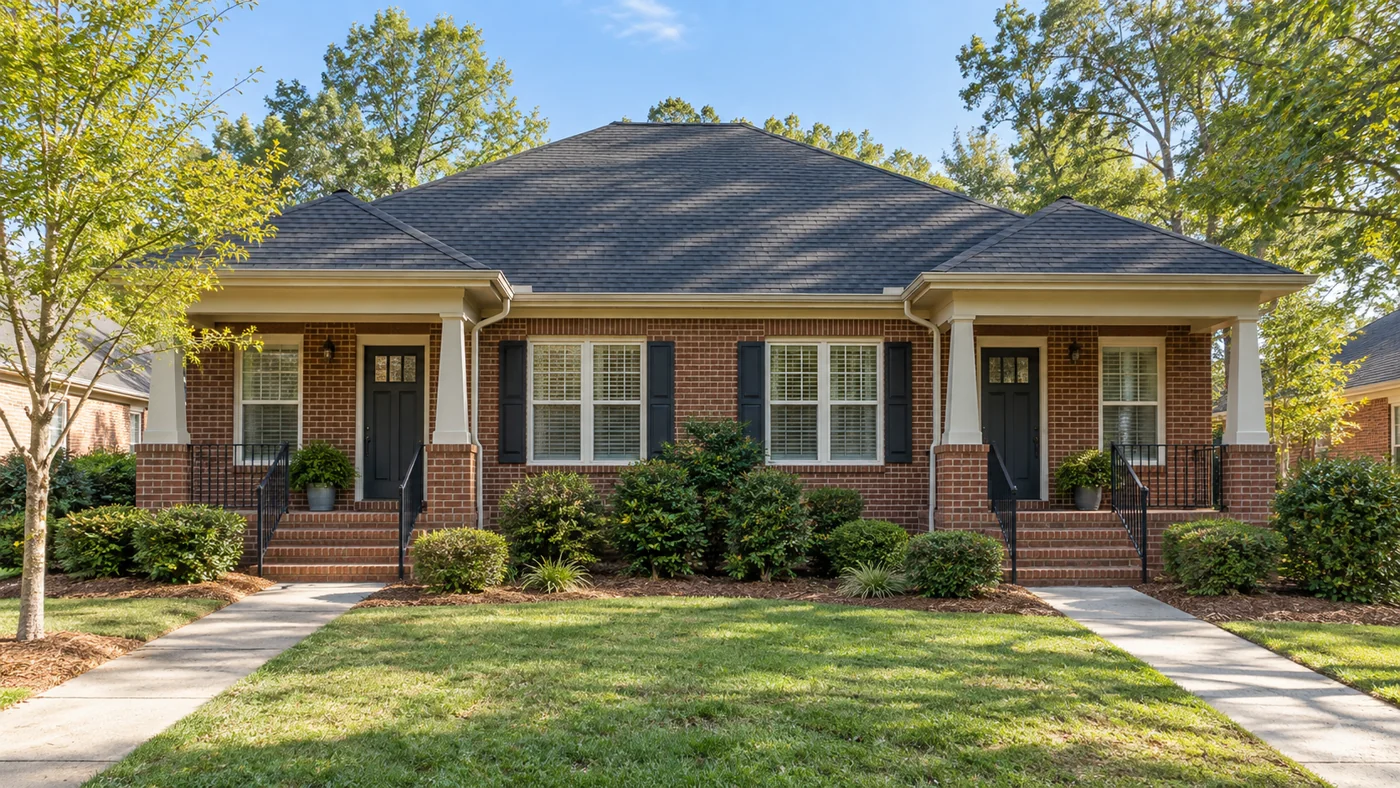
North Carolina landlords need insurance that accepts the actual rental arrangement and protects the building, relevant owner property, and liability exposure. A dwelling policy may fit, but liability and lost-rent protection must be checked separately. Surplus lines can be an option when an eligible rental cannot find suitable admitted coverage.
A house does not stop needing insurance when its owner moves out. Its insurance needs change. A long-term tenant, a furnished student rental, an owner-occupied duplex, and a home occasionally offered for weekends create different underwriting questions. Describing that use accurately is the first step toward a useful quote.
If an insurer has declined your rental, you may still have options. Start with the reason for the decline and the actual condition of the property. A clear submission helps an agent compare available markets without forcing the home into an unsuitable homeowners policy.
Describe who occupies the home and how it is rented
Give the agent the property address, number of units, lease length, annual rental pattern, and whether you live on the premises. Explain whether tenants rent the entire dwelling or individual rooms, whether furnishings are supplied, and whether a management company is involved. Include garages, detached apartments, outbuildings and any business activities.
Do not describe a rental as owner occupied merely because you keep belongings there or visit regularly. Likewise, occasional personal use does not eliminate a rental exposure. If the arrangement will change after purchase, explain both the current situation and the intended one, including dates.
The North Carolina Department of Insurance dwelling-policy guide identifies rental properties among the uses for which dwelling coverage may be appropriate. That is a starting point, not a statement that every dwelling form accepts every tenant or rental activity. Ask for written confirmation of the use accepted by the proposed insurer.
Separate the building from belongings and rental income
The building limit should reflect the cost to rebuild the insured structure, not the property tax assessment, loan balance, or price paid. Land is not reconstructed. Describe additions, enclosed porches, unusual finishes and detached structures so the estimate reflects the actual property. An inexpensive acquisition can still require a substantial rebuilding limit.
Owner-supplied appliances, furniture, tools and maintenance equipment need their own review. Ask where they are covered, what limit applies, and whether theft or tenant-caused damage is restricted. A building limit does not automatically protect every item you own at the address.
The tenant’s belongings are a separate issue. NC DOI explains that a landlord’s insurance does not provide the tenant’s personal property or personal liability protection. Discuss renters insurance in the lease process, with appropriate legal advice, rather than implying your landlord policy protects everything inside the home.
Compare the policy form and endorsements, not just the label
Dwelling forms often use familiar labels such as DP-1, DP-2 and DP-3. The practical questions are which causes of loss are covered and how a covered loss is valued. A named-perils form lists covered causes. An open-perils building form covers physical loss subject to exclusions and conditions. Neither label means every incident is insured.
Surplus insurers may use proprietary forms or endorsements that change the familiar starting form. Obtain the form numbers and all proposed exclusions. Review water damage, theft, vandalism, animal liability, roof settlement, vacancy, and damage caused by occupants. A broad-looking declaration page can still have a significant restriction attached.
Make comparisons using the same property facts and limits. If one option excludes water damage while another includes limited water coverage, that difference belongs beside the premium. Your ability to fund a loss is part of the decision, particularly when the property is carrying a mortgage and rental income supports its payments.
Confirm landlord liability and who is insured
NC DOI notes that dwelling policies typically do not include liability in the same way homeowners packages do. Ask whether premises liability is included, endorsed, or arranged separately. Verify the limit, defense provisions, exclusions, and the rental location shown on the liability coverage.
Tell the agent if ownership is held by an LLC, trust, partnership, or multiple individuals. The application and policy should accurately reflect ownership and the parties needing coverage. Adding a lender, property manager or co-owner is not interchangeable with naming the property owner as an insured. Have the agent explain each party’s status.
Discuss features that increase injury exposure, such as stairs, elevated decks, pools, pets, trampolines or waterfront access. An umbrella is not automatically a solution if the underlying policy excludes the activity. Ask whether the umbrella accepts the rental, ownership structure, and underlying liability insurer. These details matter before an incident, not only after a demand letter arrives.
Understand when lost rental income is covered
Lost-rent coverage usually responds to a defined covered event, subject to the policy’s language and limits. It is not a promise to replace all rent that fails to arrive. Tenant nonpayment, ordinary turnover, a weak rental market and voluntary renovations are different from a building made uninhabitable by an insured fire.
Ask whether the policy uses fair rental value, loss of rents, or business income terminology. Confirm the applicable dollar limit, period of recovery, deductible or waiting period, and treatment of expenses that stop while the property is unusable. Clarify whether the amount is included within another limit or available in addition.
Keep leases, rent ledgers, management statements, and evidence of ordinary operating expenses. A hypothetical example: after a covered kitchen fire, the repair estimate might be straightforward while the lost-income calculation depends on lease records and the covered repair period. Documentation makes that discussion easier, but it does not expand the policy’s coverage.
Review North Carolina wind and flood arrangements carefully
Coastal rentals may need several coordinated policies. Check whether wind and hail are inside the property policy, excluded, or separately insured. A hurricane can produce both wind damage and flooding, and the cause of damage matters. Separate policies may have separate deductibles and claims processes.
NC DOI’s windstorm guidance states that eligibility for an NCIUA wind-and-hail policy requires an active primary policy from an admitted North Carolina carrier that excludes windstorm. Do not assume a surplus property policy can simply be combined with that wind-only product. Have the agent verify the exact proposed arrangement.
Flood also deserves a separate decision for inland rentals. A lender’s flood determination does not measure every possibility of water reaching the property. Evaluate building and contents protection and ask specifically about lost rent, which should not be assumed included under a flood policy. Compare the actual flood wording and deductible rather than relying on the homeowners or dwelling declaration.
Still looking for a workable option?
An older roof, a nonrenewal, or a difficult property does not tell the whole story. Share the details so your available options can be evaluated.
Standard-market options are reviewed first. A request is an inquiry, not an offer or confirmation of insurance. Coverage is subject to underwriting.Give underwriters a clear record of the property
Prepare current exterior photographs, roof age and replacement documentation, electrical and plumbing updates, heating information, occupancy details and prior loss records. If a claim was repaired, include the completion invoice and photographs. Explain the cause and what changed so a reviewer can distinguish an unresolved problem from a completed repair.
Older houses may have insurable features that are difficult to explain with a checkbox. Identify updated components accurately. Replacing a panel does not necessarily mean all wiring was replaced; patching a roof does not establish its replacement year. Honest detail gives an underwriter a more useful picture than an optimistic description that later conflicts with inspection.
Ask whether an inspection is required after binding and how repair recommendations are handled. If the property is between tenants or under renovation, disclose that immediately. An offer based on continuous occupancy may not fit the period before the next lease begins. Review vacant-home and renovation coverage if that transition is material.
Compare the complete landlord insurance proposal
| Item | Question to resolve |
|---|---|
| Property coverage | Which buildings and owner belongings are scheduled? |
| Valuation | Replacement cost, actual cash value, or a special settlement schedule? |
| Liability | Which people, entities, premises and rental activities are insured? |
| Income | Which event triggers payment and what limits recovery? |
| Deductibles | How much applies to ordinary, wind, named-storm and water losses? |
| Total cost | What premium, taxes, fees and payment terms apply? |
Ask for sample forms before deciding if a coverage limitation would be difficult to absorb. Also confirm cancellation terms and any minimum earned premium, especially if you expect to sell the rental soon. Financing a premium can introduce its own payment obligations.
An admitted policy, an eligible residual-market option, and a surplus policy serve different situations. The best fit depends on availability and terms, not a blanket assumption that one category is always better. Use the quote comparison guide to keep the differences visible.
Plan the insurance handoff between tenants
Tenant turnover is a useful moment to photograph the property and review its condition. Record the date the prior tenant leaves, the planned repairs and when the next lease begins. If the home will be empty longer than expected, tell the agent instead of assuming the original annual occupancy description still applies.
Ask how the policy treats damage discovered after move-out. A broken cabinet, a missing appliance, vandalism and long-term deterioration are different facts. Do not describe every problem as a covered theft or malicious act. Preserve photographs, lease records and a factual account, then let the insurer evaluate any reported claim under the actual wording.
Keep the security-deposit process separate from insurance. Whether you can charge a tenant for damage is a legal and contractual question, while the insurer’s obligation depends on coverage. A claim payment, deductible or denial does not automatically settle the tenant’s responsibilities. Seek appropriate advice when those issues are disputed.
When a new tenant moves in, verify that the rental arrangement has not changed. Multiple unrelated occupants, a furnished lease, a business operating from the property or a new pet may raise questions that were not part of the earlier application. A brief documented review is easier than discovering after an incident that the insurer was still evaluating last year’s rental. Keep contact information current so notices and inspection requests reach someone who can act on them.
Update coverage when the rental changes
Review the policy before changing from annual leases to short stays, adding a separate unit, renovating, leaving the property empty, or transferring ownership. Tell the agent before the change begins. Insurance written for a completed long-term rental may not suit a home stripped for major construction.
Maintain a simple annual file containing the renewal, endorsements, photographs, lease arrangements, inspection reports and repairs. Check replacement cost after additions or major improvements. Review whether the deductible remains affordable and whether the liability arrangements still fit the ownership structure.
If the current insurer will not renew, begin the replacement search with the notice and expiration date. Do not cancel existing protection because a quote has arrived. Confirm binding, payment and the effective date, and send the required evidence to the lender. A careful transition can help avoid a preventable lapse while you work through a difficult placement.
Frequently asked questions
Can I use ordinary homeowners insurance for a North Carolina rental?
Not without confirming that the insurer accepts the rental use. A homeowners form designed for an owner-occupied residence may not fit a tenant-occupied property. Describe the lease and occupancy accurately and obtain the appropriate form or endorsement.
Does a landlord policy cover my tenant’s furniture?
Generally, tenants need their own renters coverage for their belongings and liability. Your policy may cover owner-supplied items if they are properly included, but that does not make the tenant’s possessions insured property under your contract.
Will insurance pay when a tenant stops paying rent?
Do not assume so. Lost-rent protection typically depends on a covered event and policy conditions. Ordinary nonpayment and eviction costs need separate evaluation. Ask the agent to identify the specific triggering event and any exclusion affecting your situation.
Can a rental with prior claims still find coverage?
Possibly. Eligibility depends on the losses, property condition, repairs, occupancy and available markets. Provide accurate loss information and proof of completed repairs. Neither an agent nor a website can promise that a particular insurer will accept the property.
Is landlord liability automatically part of a dwelling policy?
No. NC DOI notes that dwelling policies typically do not include liability like homeowners packages. It may require an endorsement or a separate policy. Check the actual proposal and the identities of the insured owners.
What should I send first when requesting a rental quote?
Start with the address, ownership name, occupancy and lease details, desired effective date, current declarations, any nonrenewal notice, roof information and loss history. Send sensitive documents through the agent’s approved secure process rather than an unprotected general message.
A clearer next step for your home.
Bring your coverage questions, property details, and deadline. Start a conversation about the options that may fit your situation.
Standard-market options are reviewed first. A request is an inquiry, not an offer or confirmation of insurance. Coverage is subject to underwriting.Sources and further reading
Official resources consulted for this guide. Program eligibility and policy wording can change; confirm the current requirements for your property.
Last source check: 2026-10-30. This guide is general information, not a coverage determination. Read our editorial standards.